The Ward Cemetery
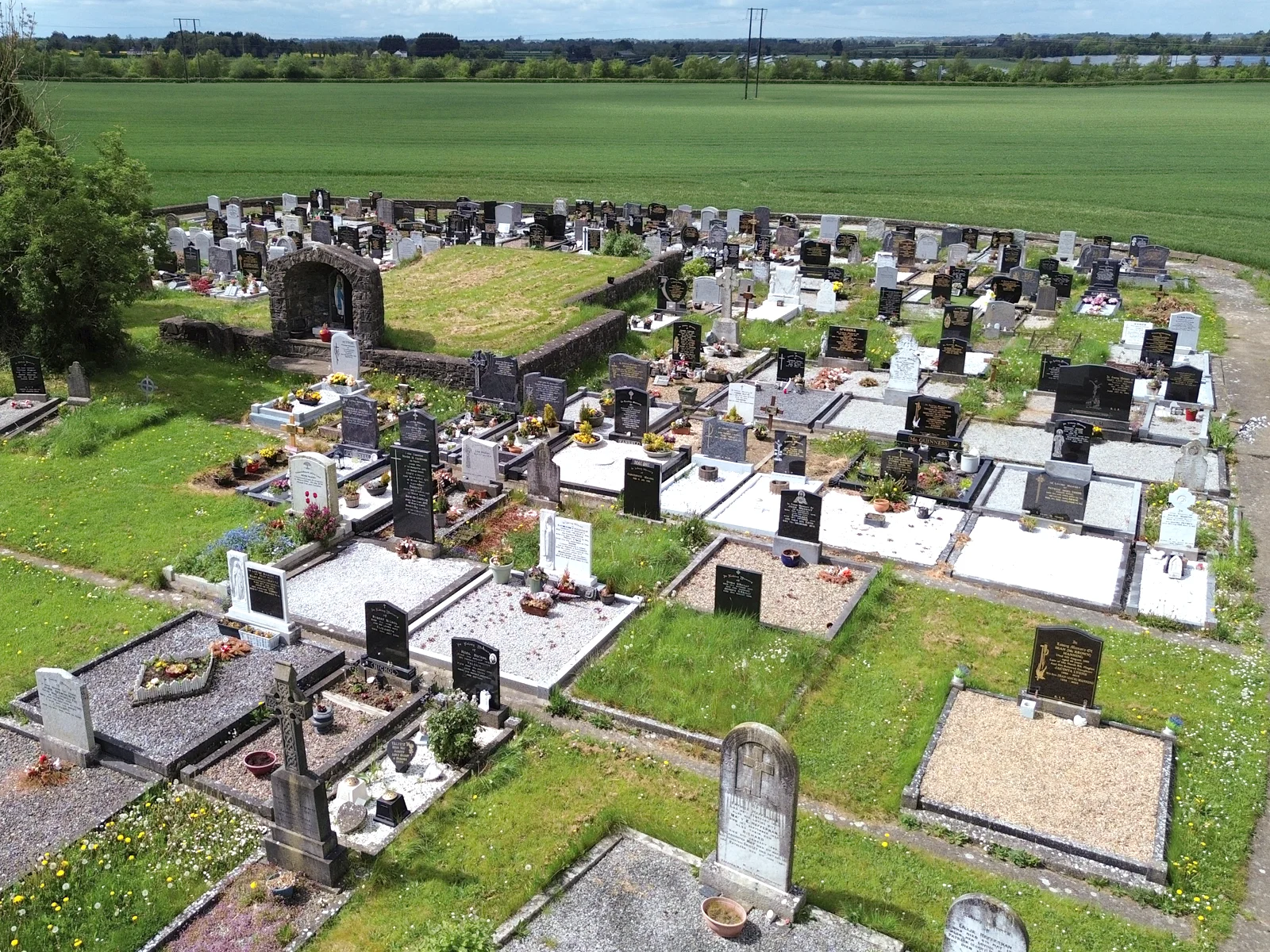
The Ward Cemetery is set in tillage fields and is located on the north side of the R121 to the east of the N2. The boundary wall of the site is curving possibly denoting an early ecclesiastical enclosure.
Historical Context
The church at Ward, which was dedicated to St. Brigid and was the original medieval church in the parish and probably fell to ruin between 1630 and 1650. The earlier history of the church is unknown, but it appears first as a possession of St. Patrick’s Cathedral. The graveyard is roughly oval and the ground level has been raised. There do not appear to be many particularly old gravestones with the exception of a fragment of a limestone window jamb of late medieval date which has been re-used as a headstone and is located to the east of the church. A holy well is located to the southwest of the church.
The church at Ward Lower appears to have been in use until c.1535. A portion of the gable is all that remained in 1887. The church appeared first as a possession of the chancellor of St. Patrick’s Cathedral in right of his rectory of Finglas. Ball stated that it was in ruins at the time of John Rochfort [the 18th century], who made a new entrance "with two neat piers of stone and brick", and planted the churchyard with two rows of elms.
Archaeological and Architectural Features
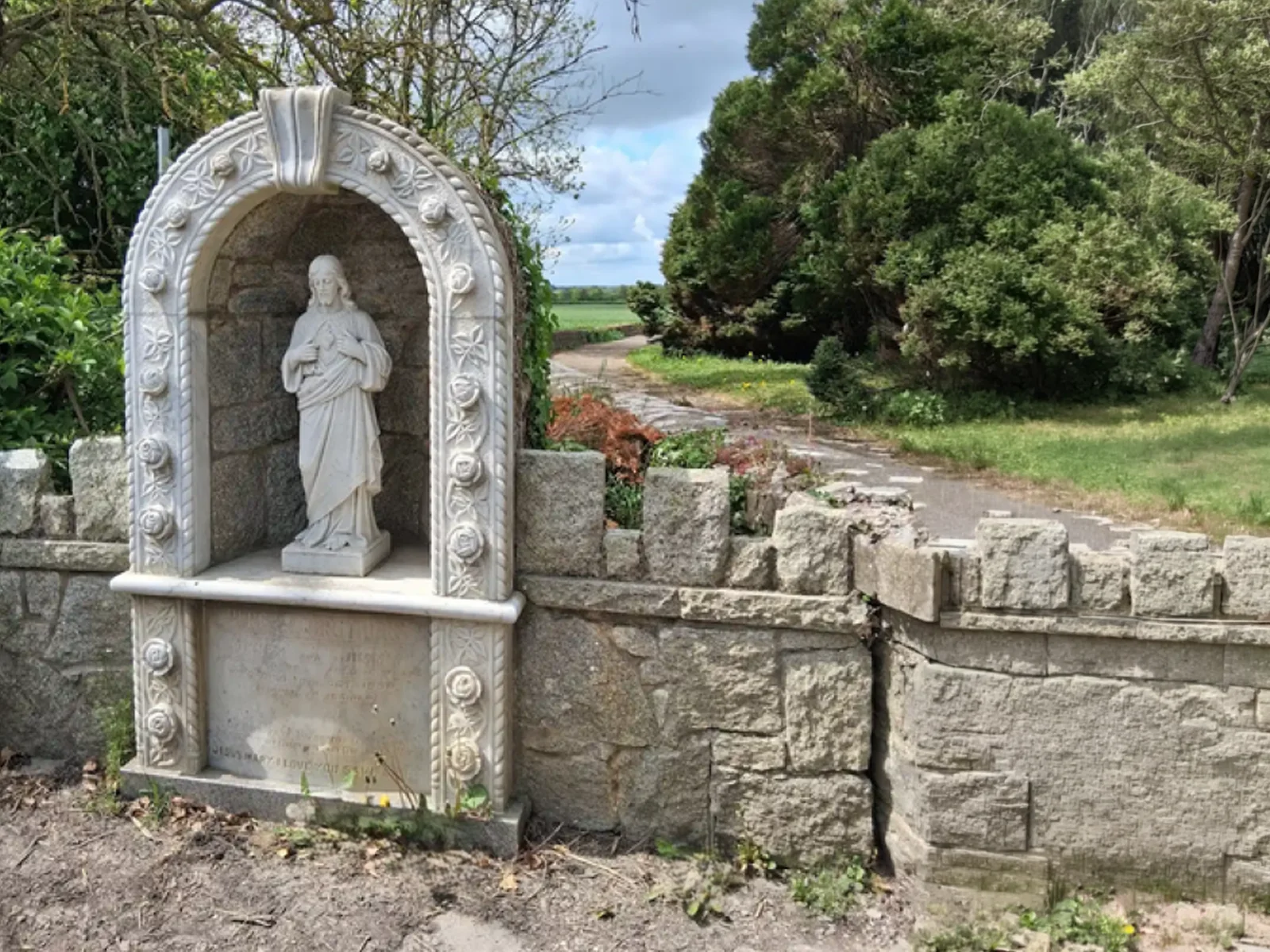
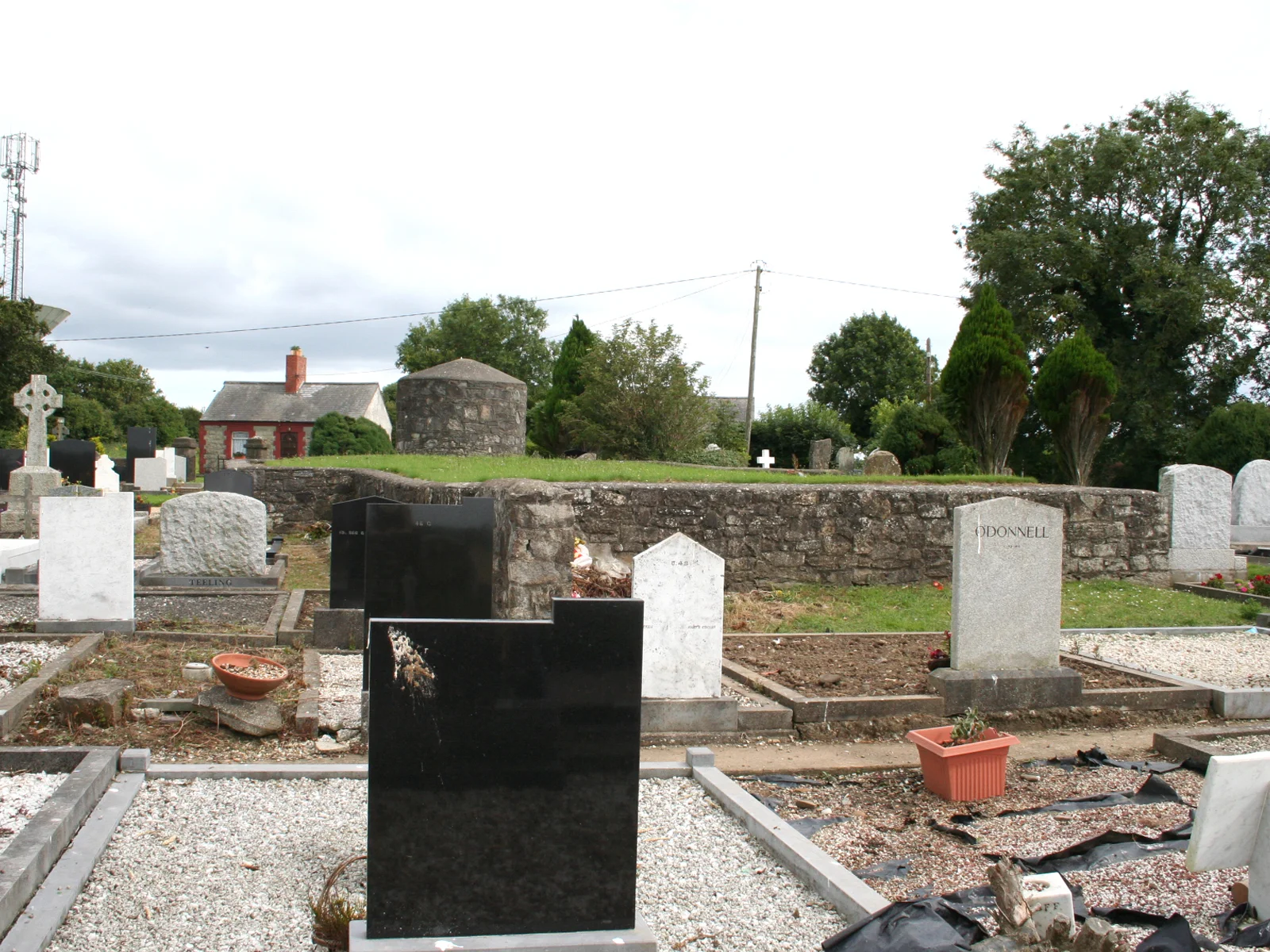
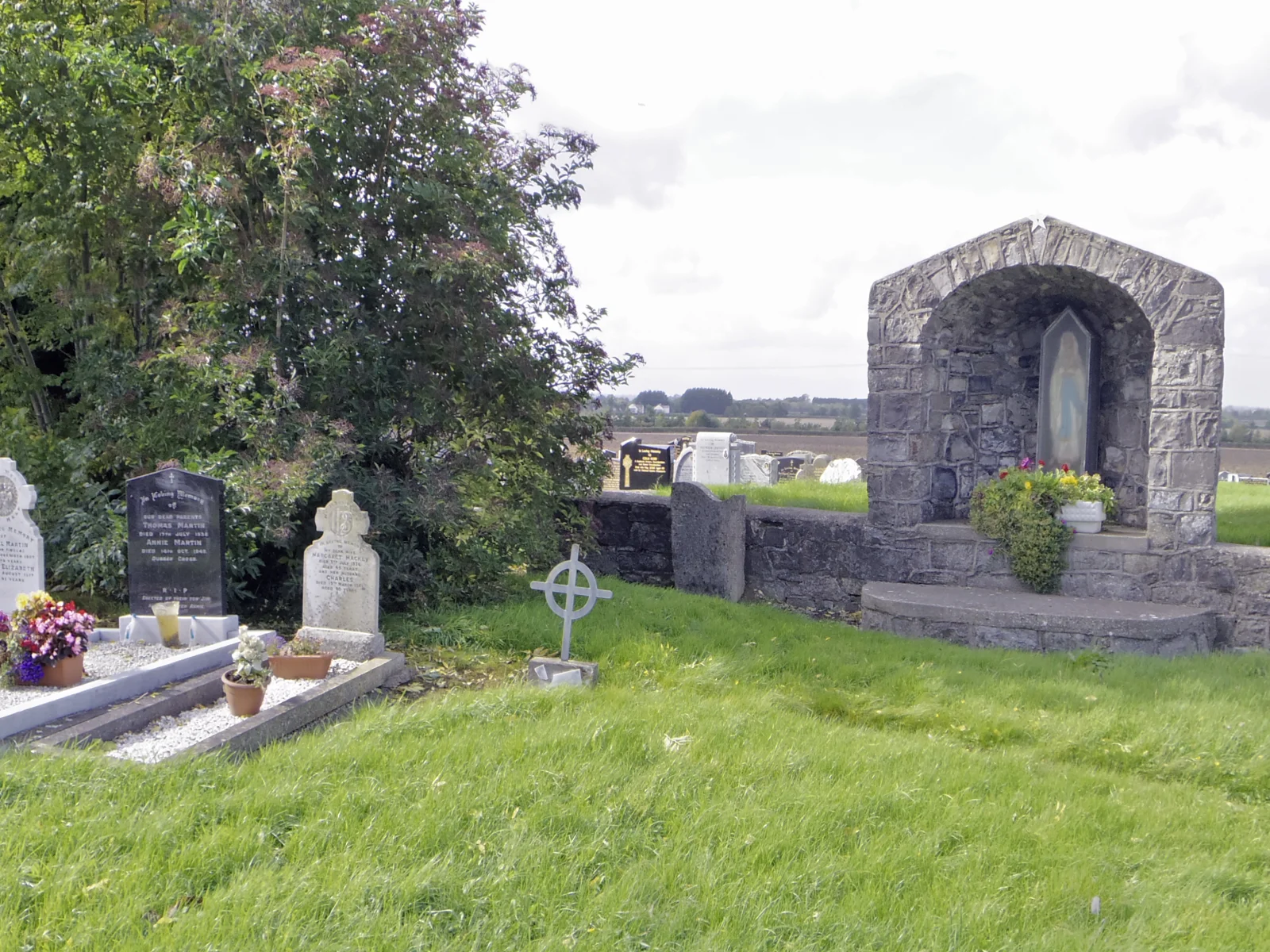
The remains of the church are located in the centre of the graveyard and consist of a low rectangular mound surrounded by a retaining wall of squared limestone masonry. There is a limestone grotto with a statue of the Blessed Virgin Mary at the east end of the mound. The boundary wall of the site is curving possibly denoting an early ecclesiastical enclosure. There is a marble and stone niche along the eastern boundary wall with a marble statue of the Sacred Heart.
General Description
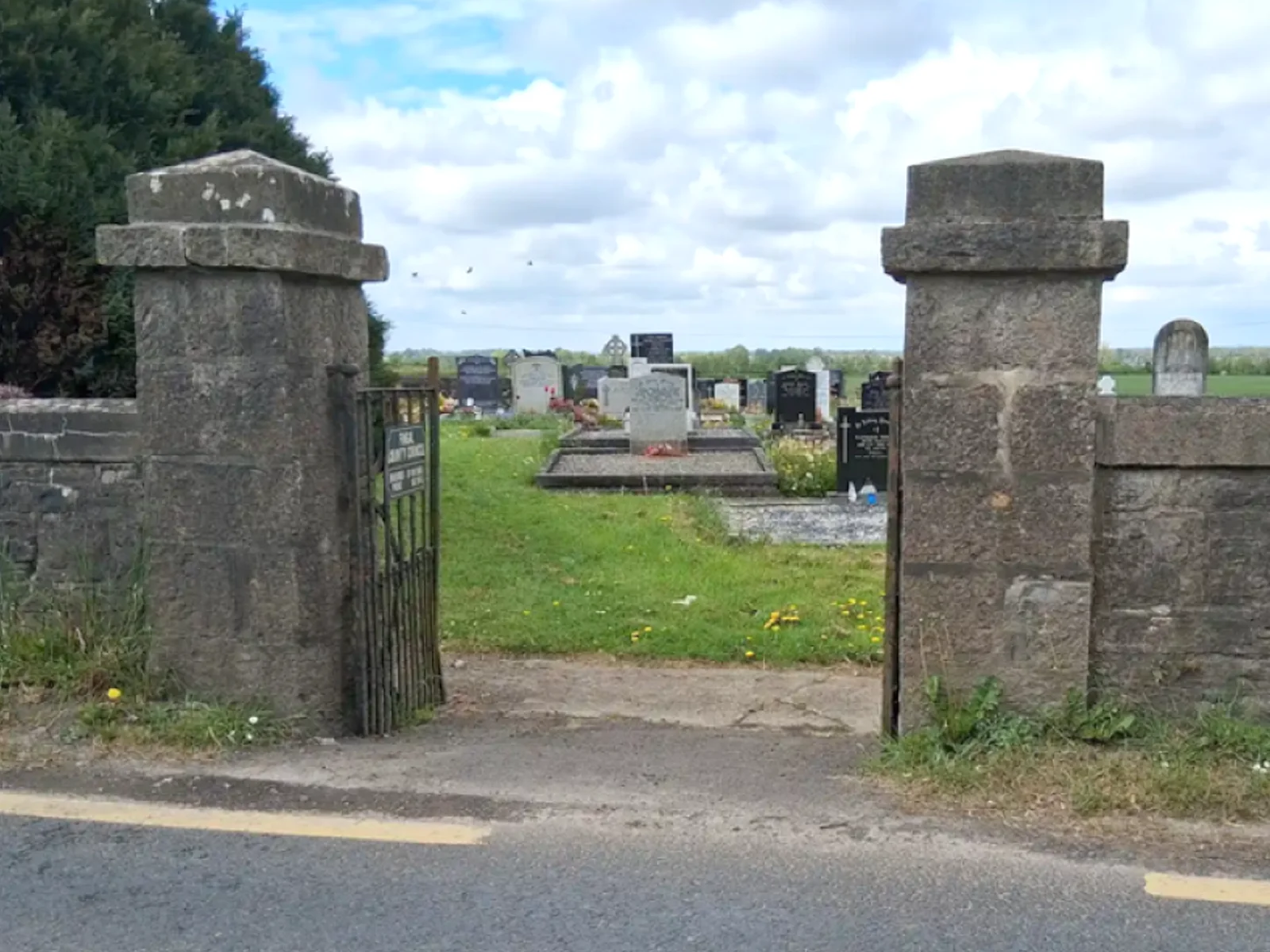
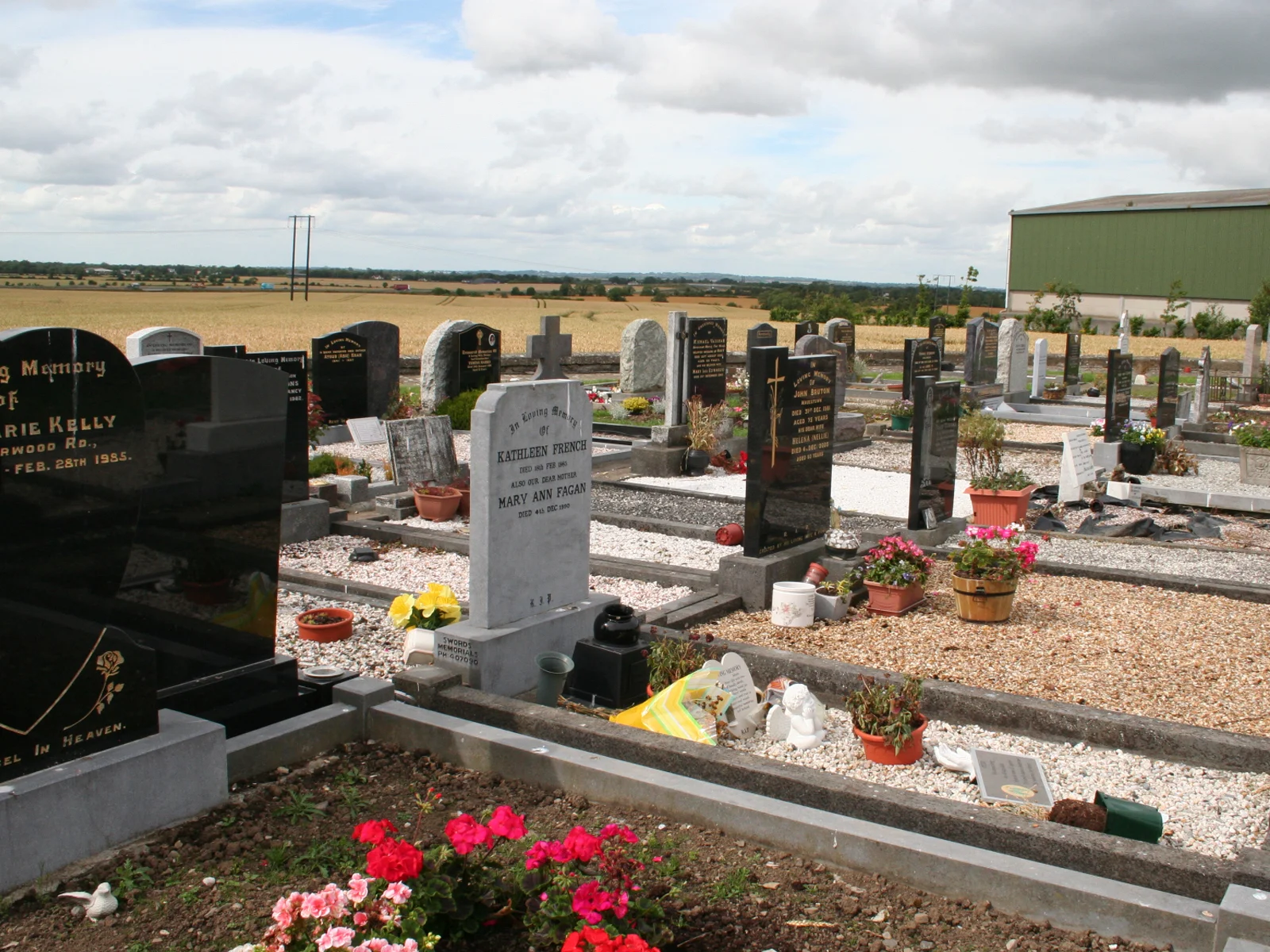
Oval graveyard, bounded by a limestone wall with gate and stile to road. The ground level inside the graveyard is higher than the surrounding land. There are extensive views over the surrounding countryside. The oldest headstones are located to the south of the church and consist of limestone headstones with curved tops. The rest of the stones are 20th century in date and laid out in east-facing rows. The oldest stone is early 18th century in date and is dedicated to Robert Lacy.
Surveys: M. Egan Vol.4 p140-141. JAPMDI Vol. xiii p.7

Directions to The Ward
Tip: directions will open in a new tab. You may need to enter your starting location manually.