St. Fintan’s Cemetery
St. Fintan’s Cemetery is located on the west side of the R105 between Sutton and Howth. The oldest section of the graveyard is bounded by hedgerow which curves distinctly in the west and represents the remains of a possible ecclesiastical enclosure. The line is continued to the east of the church as a low flat topped bank.
Historical Context
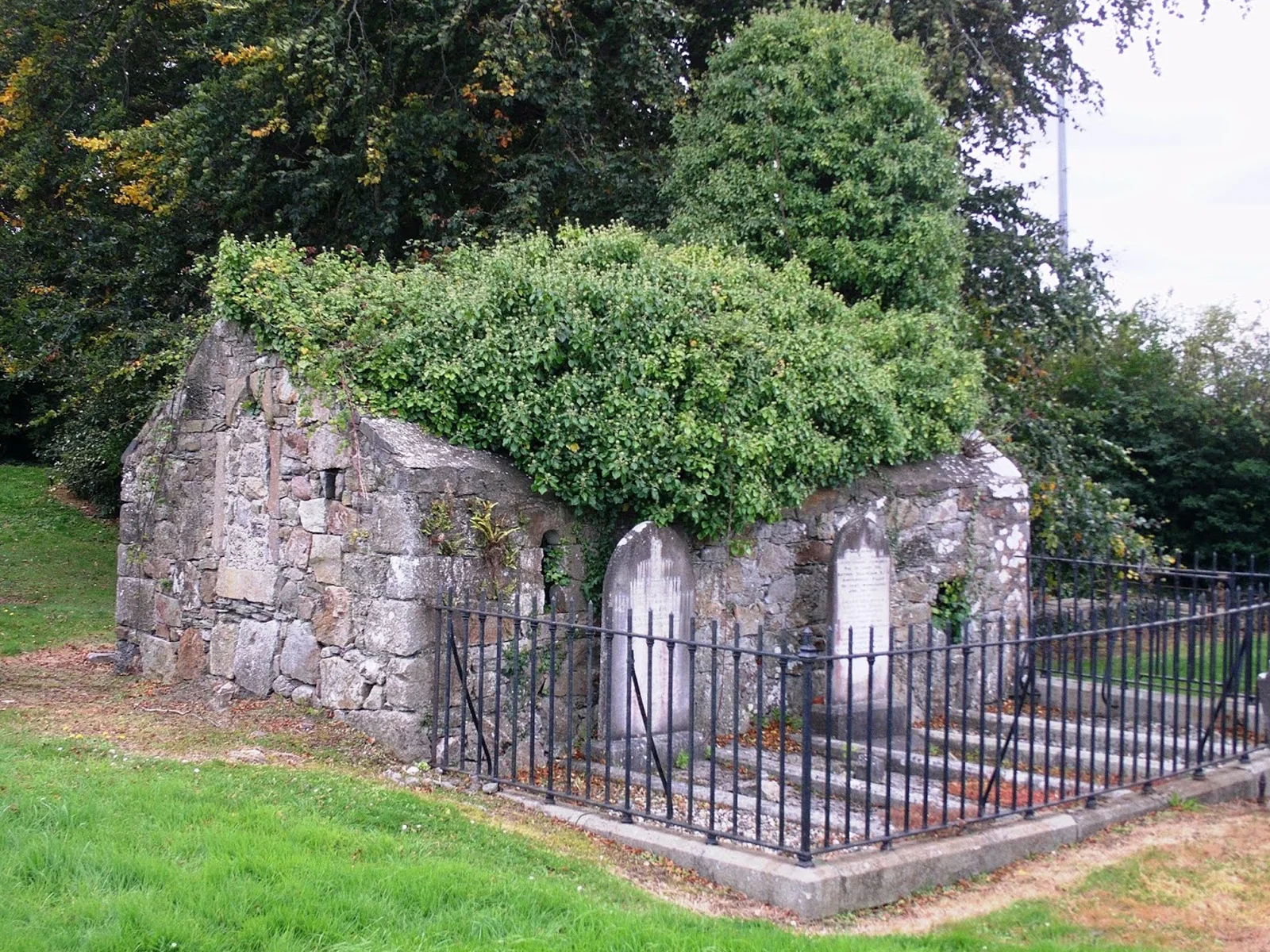
St. Fintan's is a small building which is similar in form to an oratory and appears to be pre-Norman in date with later medieval alterations and various phases of rebuilding. It is located within an enclosure defined by a flat topped bank which curves around the east end of the church. A curved boundary to the west of the church, which is depicted on the Ordnance Survey 1837 edition map, is probably a continuation of this ecclesiastical enclosure.
St. Fintan’s well is located to the southwest of St. Fintan’s church. People left relics including rags, handkerchiefs, medals and money at the well. The water was good for all bodily ailments especially sore eyes. No pattern is recorded at the well.
Archaeological and Architectural Features
The standing remains within the graveyard consist of St. Fintan's church. It is a small medieval structure constructed of squared rubble sandstone brought to irregular courses. The west gable stands to full height and has a tall narrow bellcote. There is a slightly pointed arched opening in the west gable. A square-headed opening has been inserted into the south wall. There is a round-headed opening in the east wall with sandstone jambs and sill. There is a small square-headed and a small round-headed opening in the north wall. It is surrounded by a possible ecclesiastical enclosure.
General Description
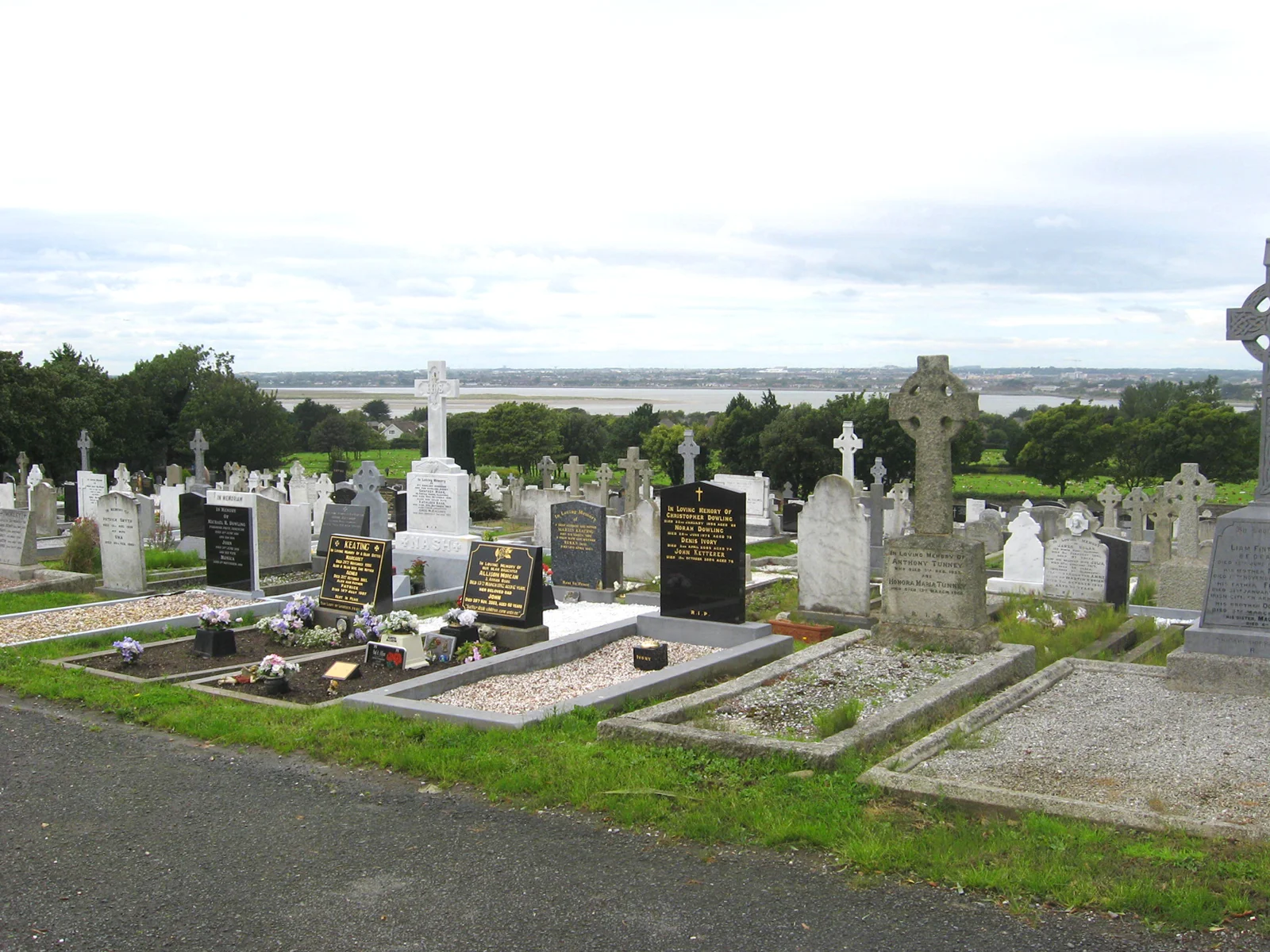
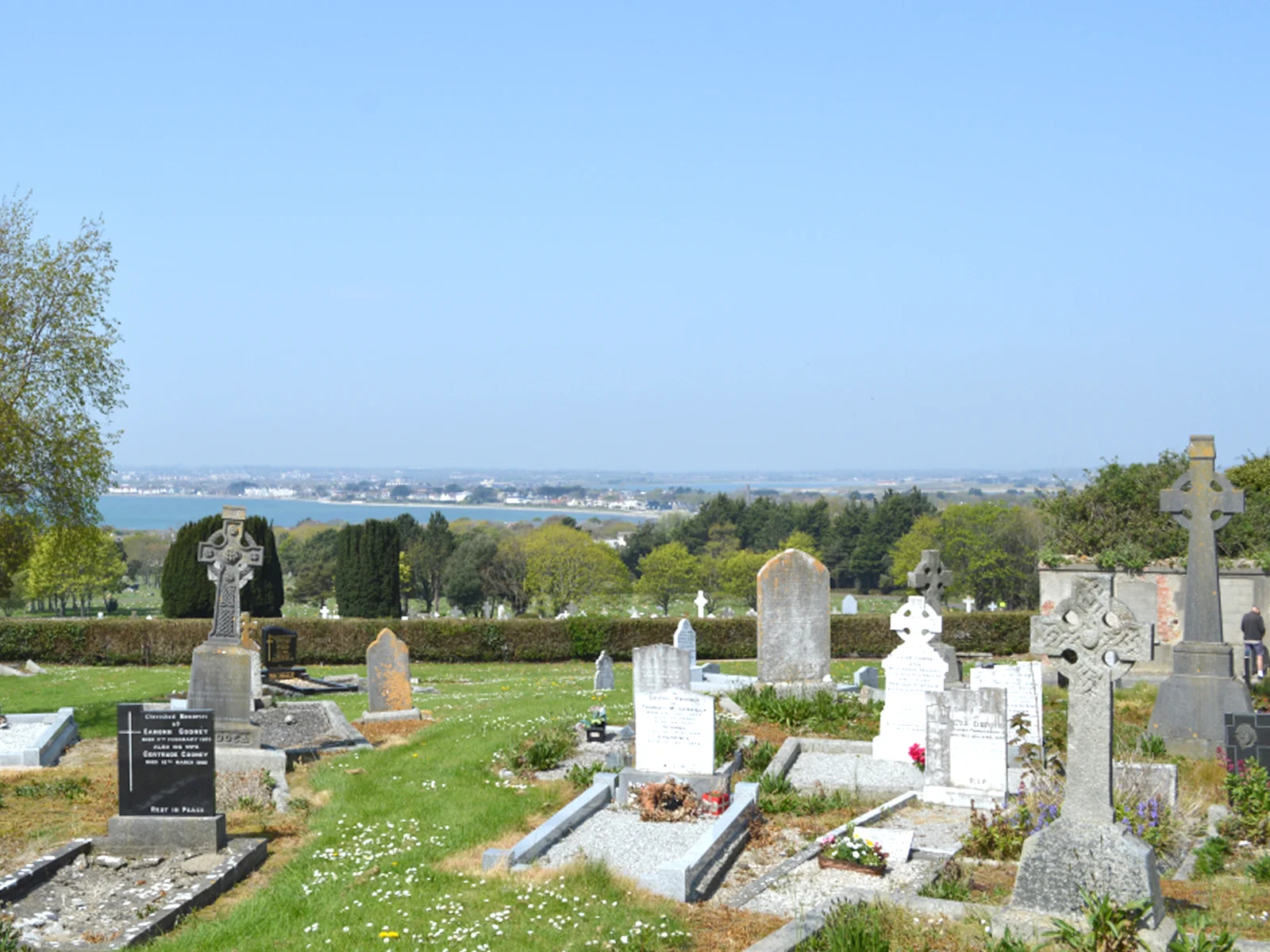
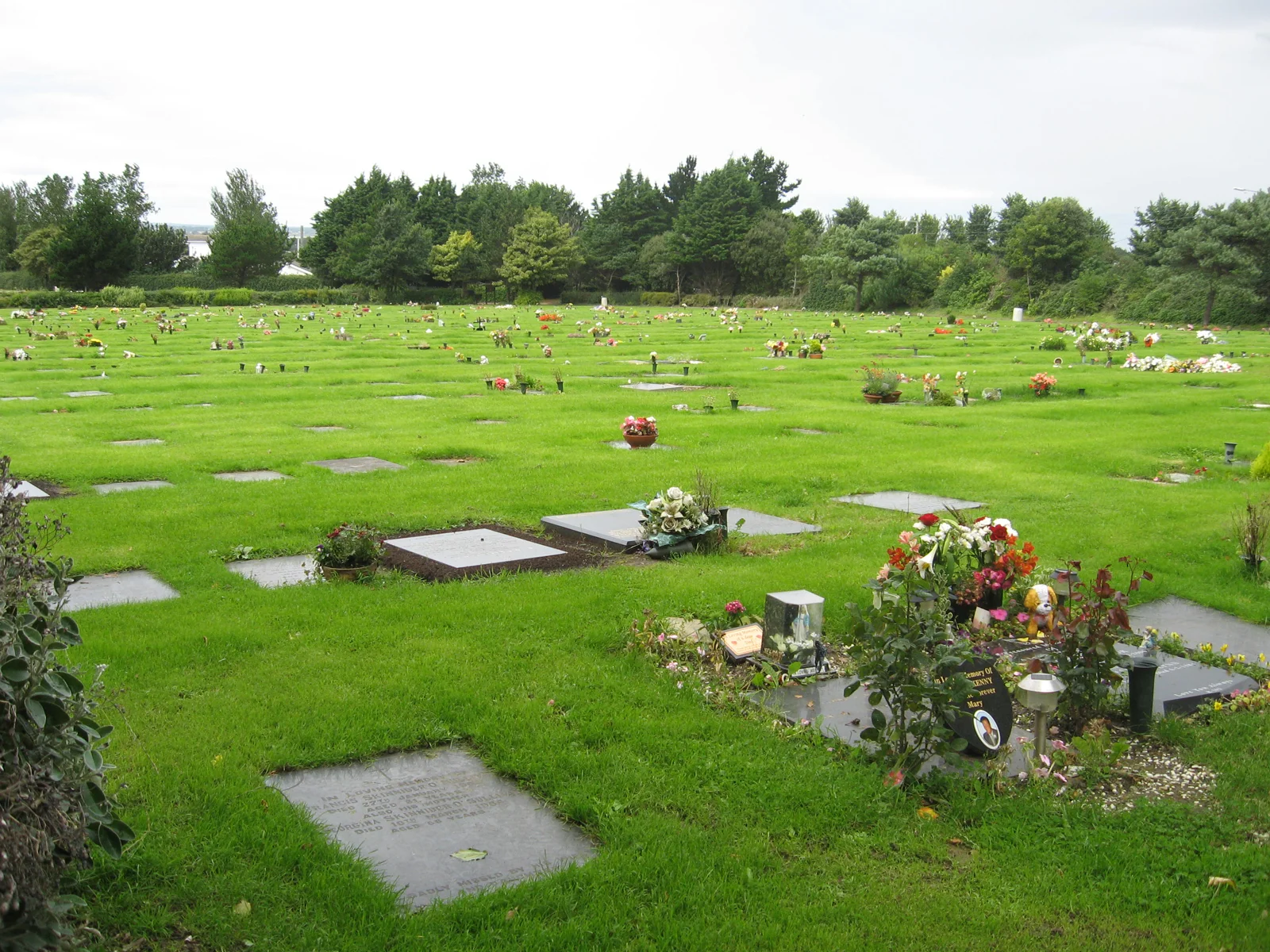
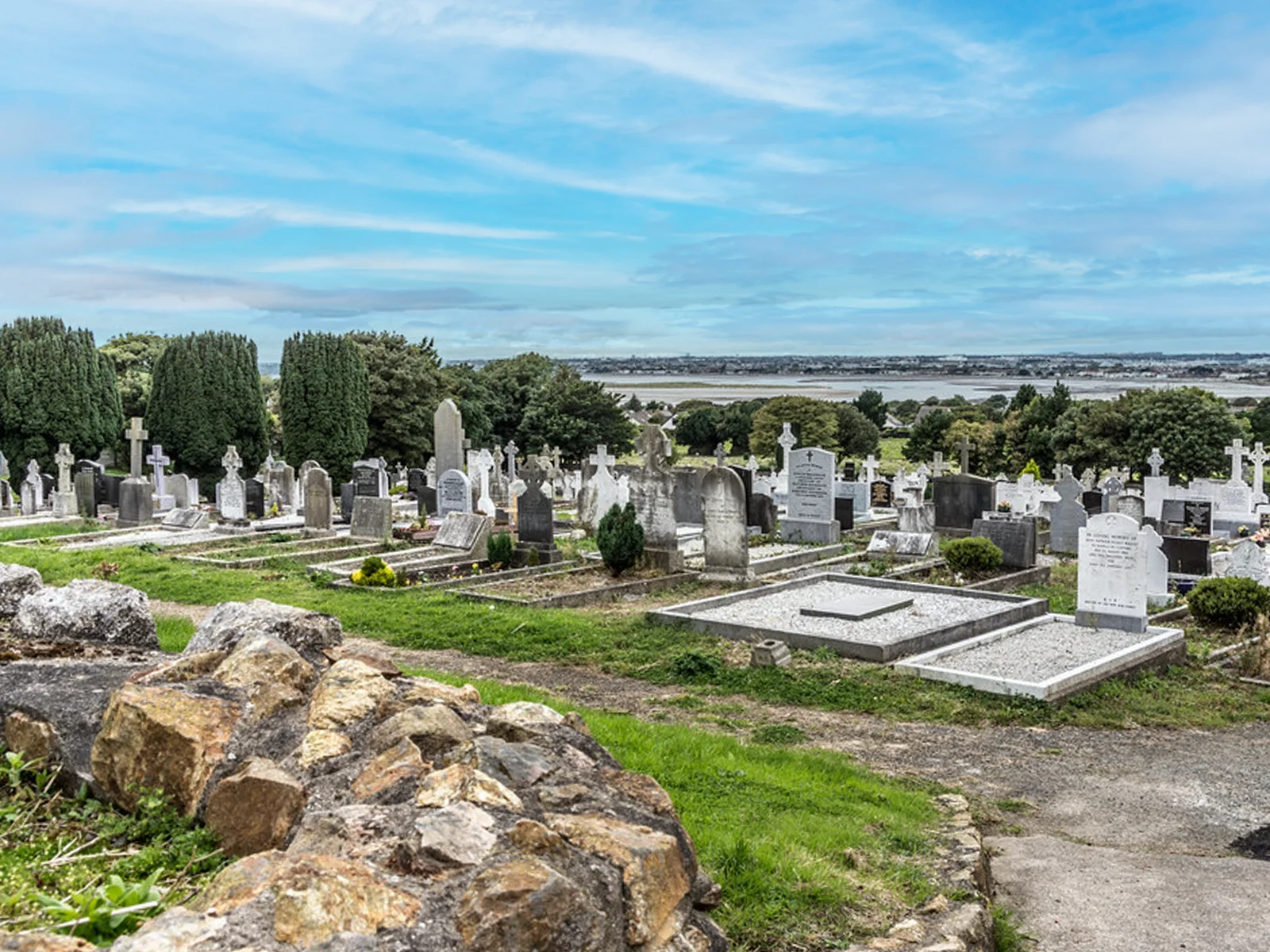
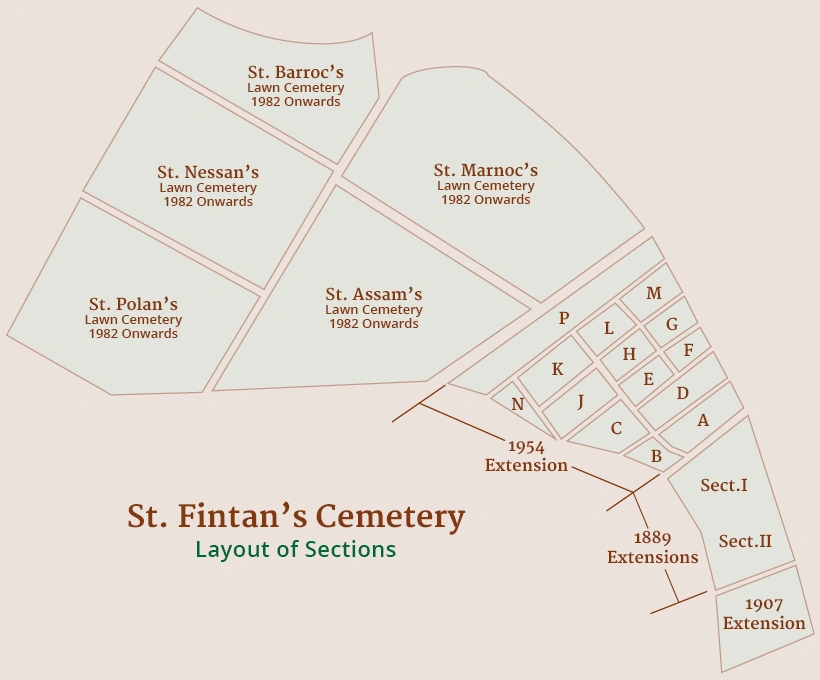
St. Fintan's graveyard has been extended significantly to the southeast and northwest and now comprises four different sections. The oldest section, known as the 1889 section, adjoins St. Fintan's church. This is adjoined to the east by the 1907 section and to the west by the 1954 section. The newest extension is located at the far west of the graveyard and is known as "the lawn" as it contains only flat grave markers (Igoe 2001, 232). The graveyard has extensive views over Dublin bay to the city.
The graveyard contains a number of significant cultural figures including Phil Lynott (d.1986), Ray McAnally (d.1989), Michael MacLiammoir (d.1978).
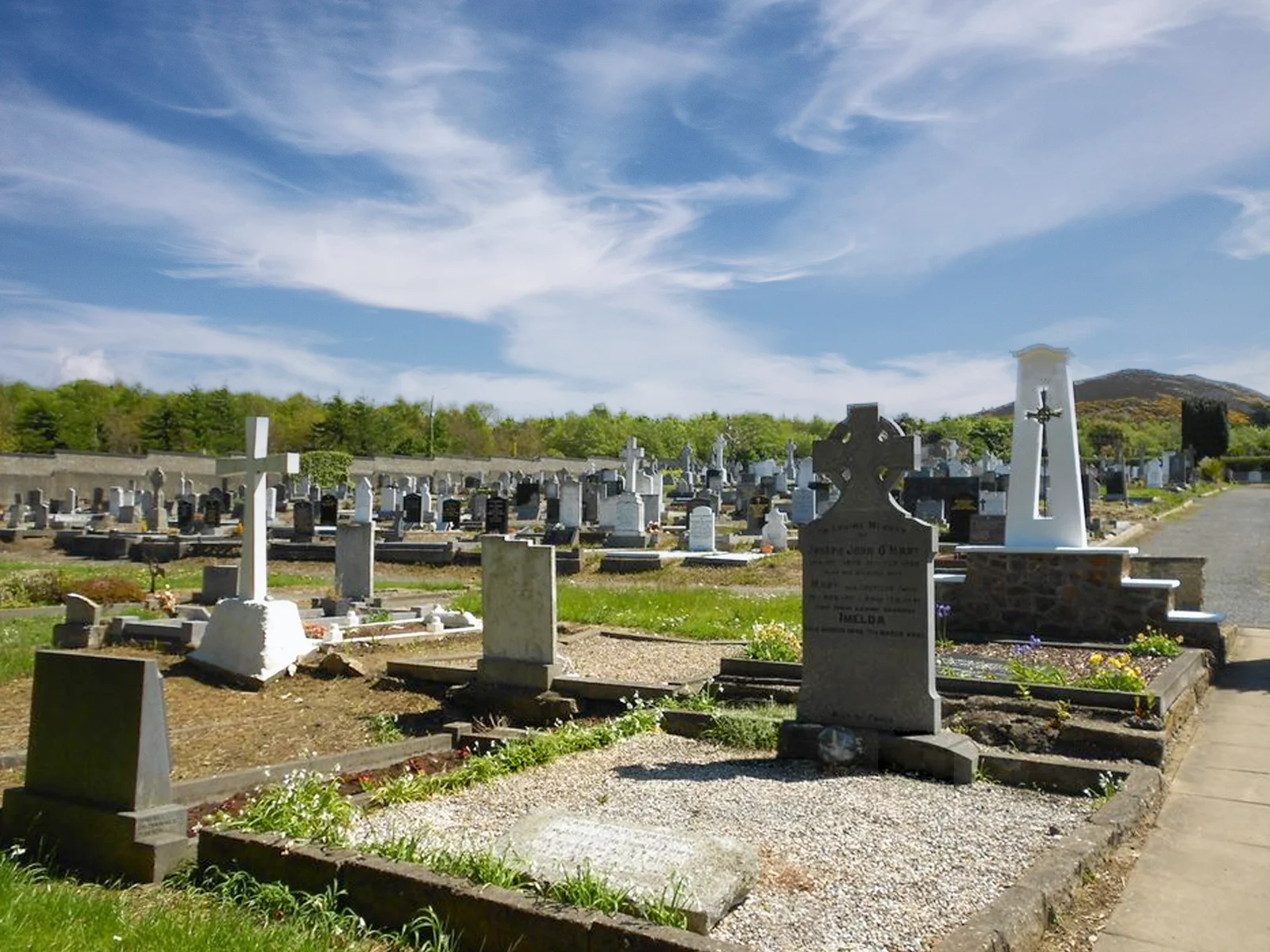
The oldest section of the graveyard bounds St. Fintan's church and contains 18th, 19th and 20th century headstones and free-standing crosses along with individual obelisks, box tombs and undecorated stone markers. Immediately to the west of the church is a limestone obelisk dedicated to the Jackson family which is surrounded by cast-iron railings. The graveyard was extended to the southeast in the early 20th century - this section contains headstones and free-standing crosses many of which are contained within kerbed plots. There are a number of unusual 20th century markers in this section of the graveyard including one dedicated to Stephen Hughes with a bronze statue by Henri Chapu and a miniature temple dedicated to Grace Burke. The extension to the northwest appears to date from the mid 20th century and contains rows of east-facing headstones and free-standing crosses. The latest section of graveyard is located at the northwest end. This contains rows of modern flat slabs. There is a memorial at the southern boundary dedicated to the victims of the Stardust fire of 1981.

Directions to St. Fintan's
Tip: directions will open in a new tab. You may need to enter your starting location manually.