Portrane Cemetery
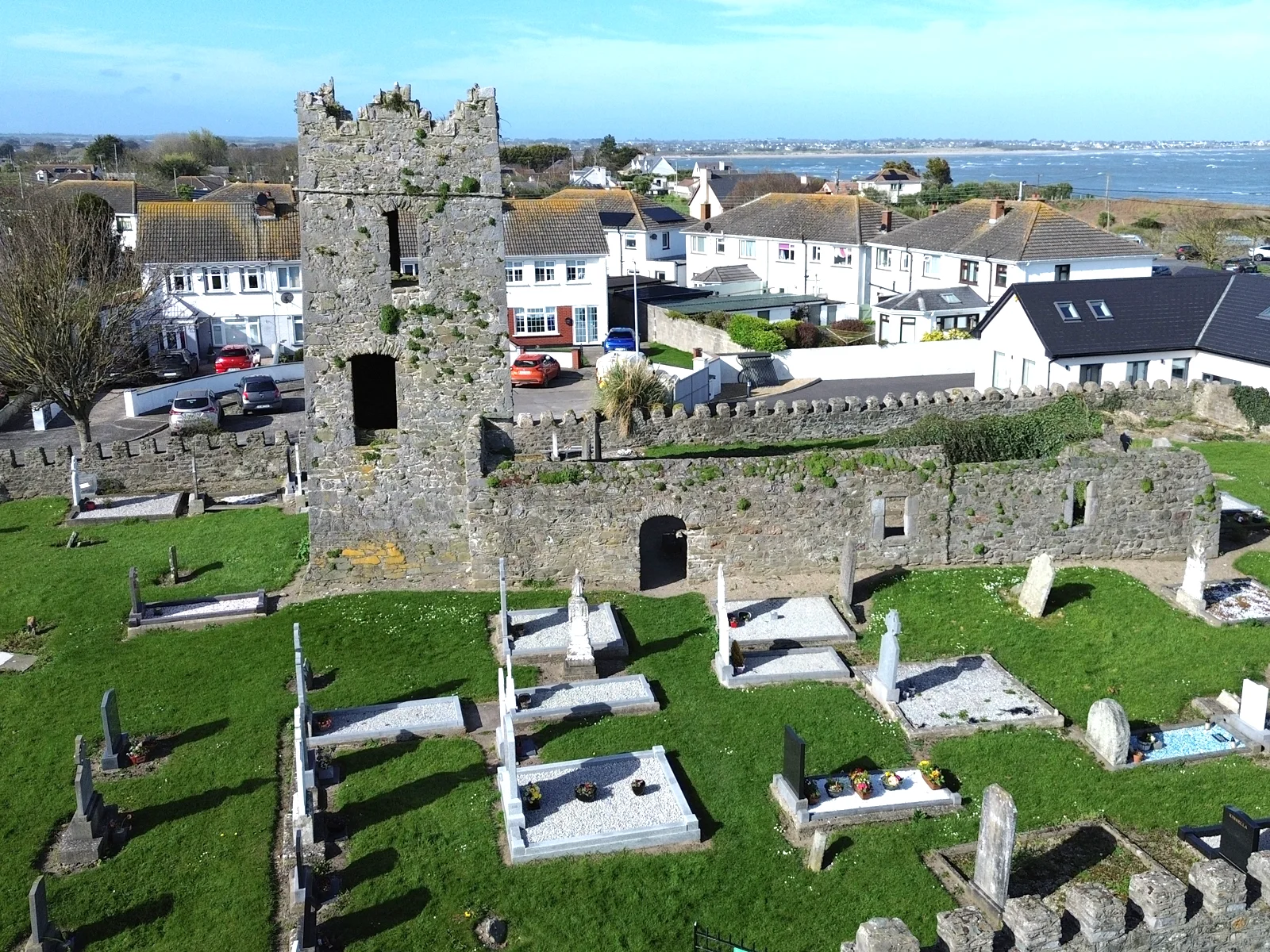
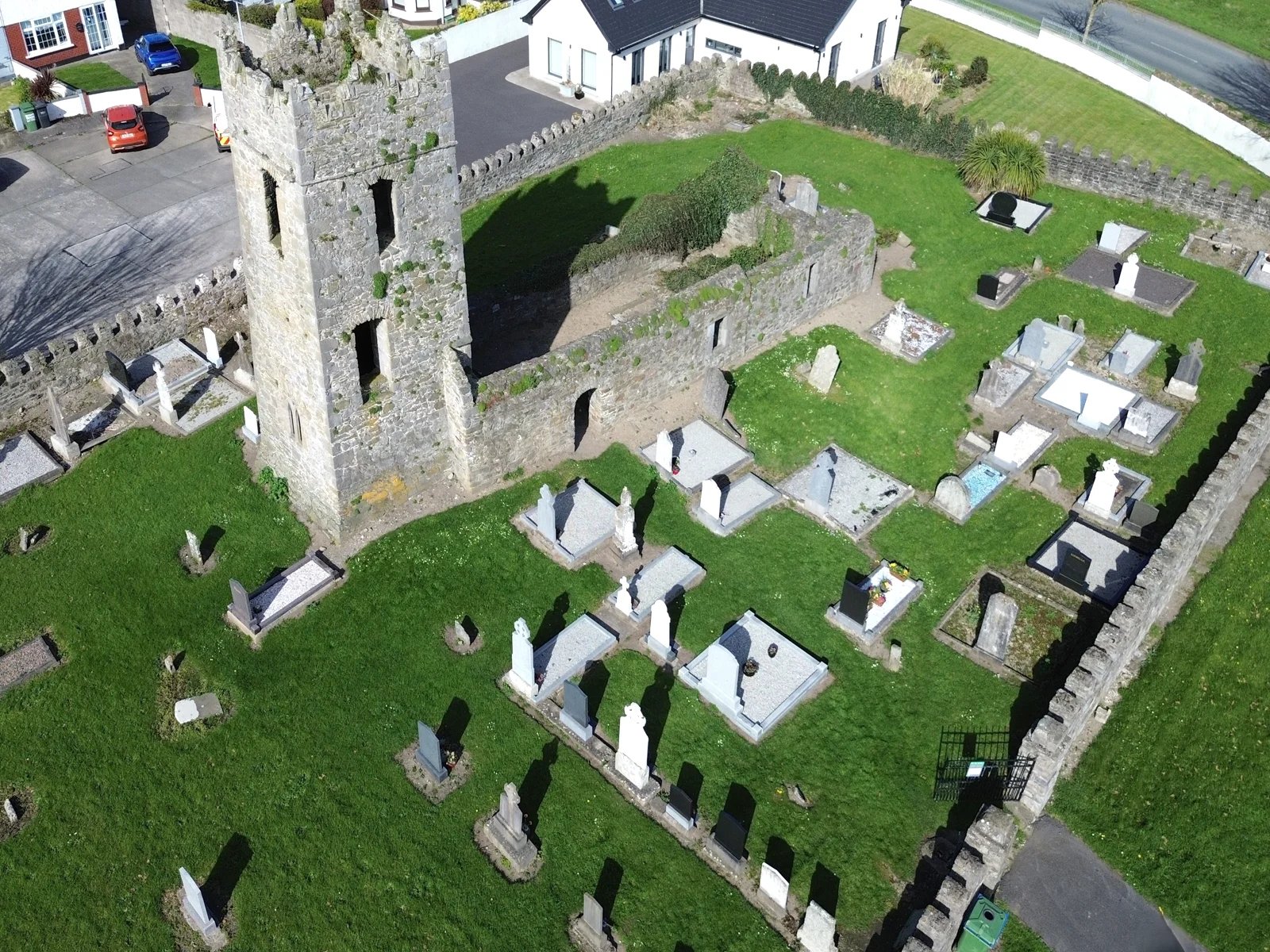
Portrane Cemetery is located to the north of the R126 to the south of Portraine village. While documentary evidence points to an early church foundation at the site the upstanding archaeological remains are later medieval in date.
Historical Context
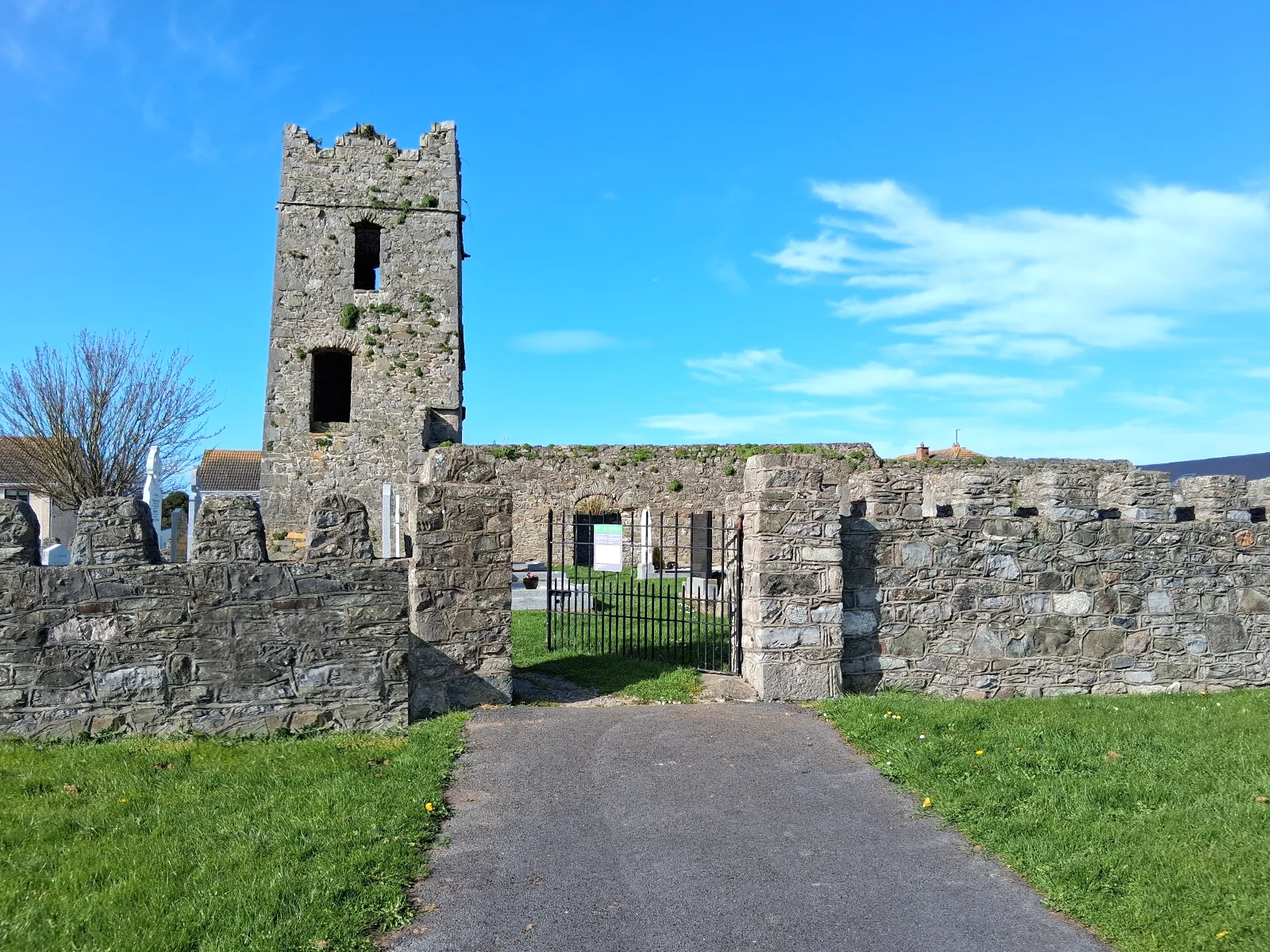
The ruins of the church of Portrane are situated within a small walled in graveyard. The church was appropriated to the monastery of Grace Dieu by the archbishop of Dublin, John Comyn in the late 12th century who held a portion of the tithes till the 16th century. In the Regal Visitation Book of 1615 the church and chancel at Portraine were described as being in good repair. By 1630, however, Archbishop Bulkeley noted that the church and chancel were down. The interior of the church has been used for burial. The churchyard itself has curious parapet with ornamental battlements and contains a possible bullaun. The church is associated with St. Catherine.
Archaeological and Architectural Features
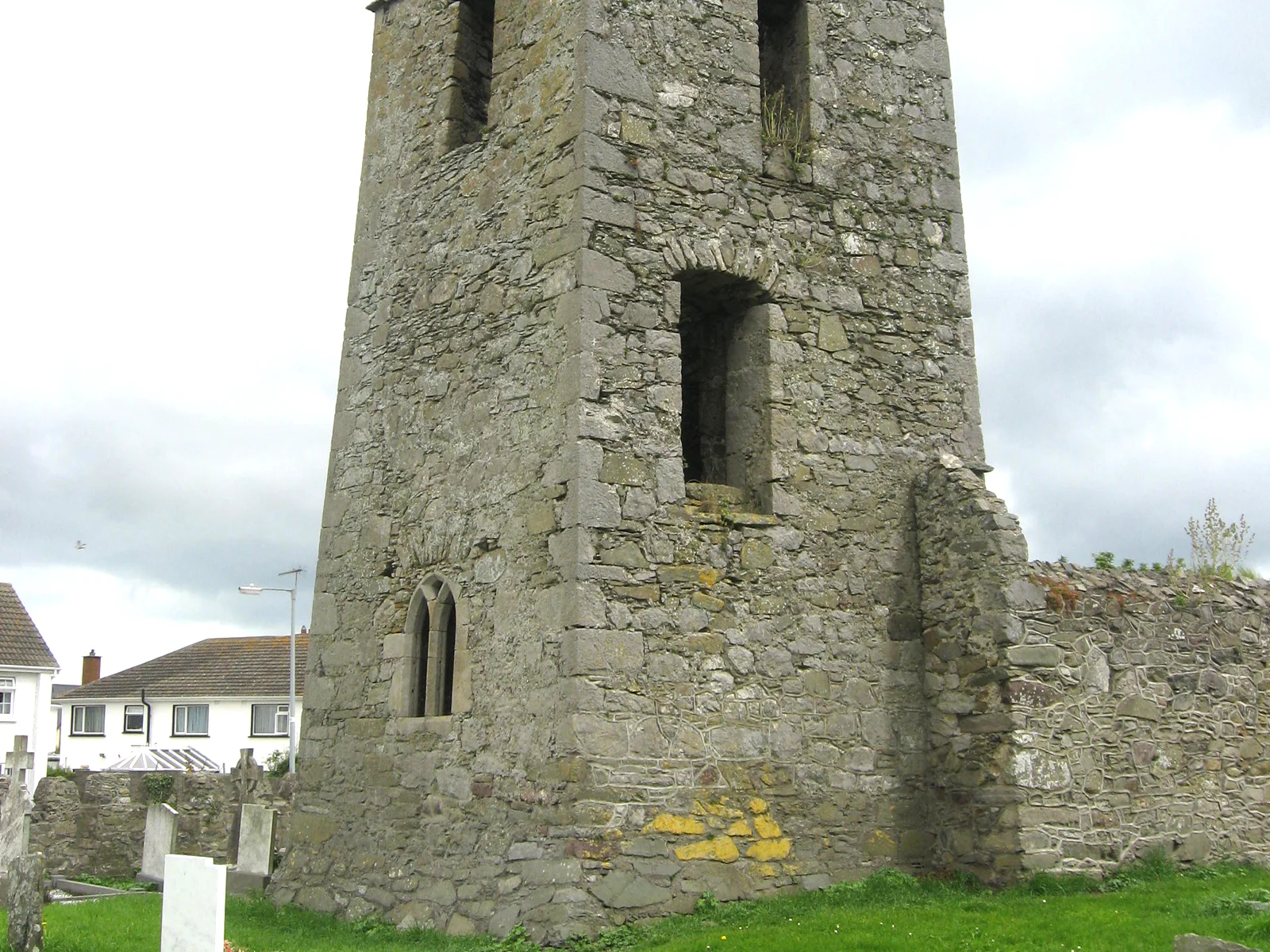
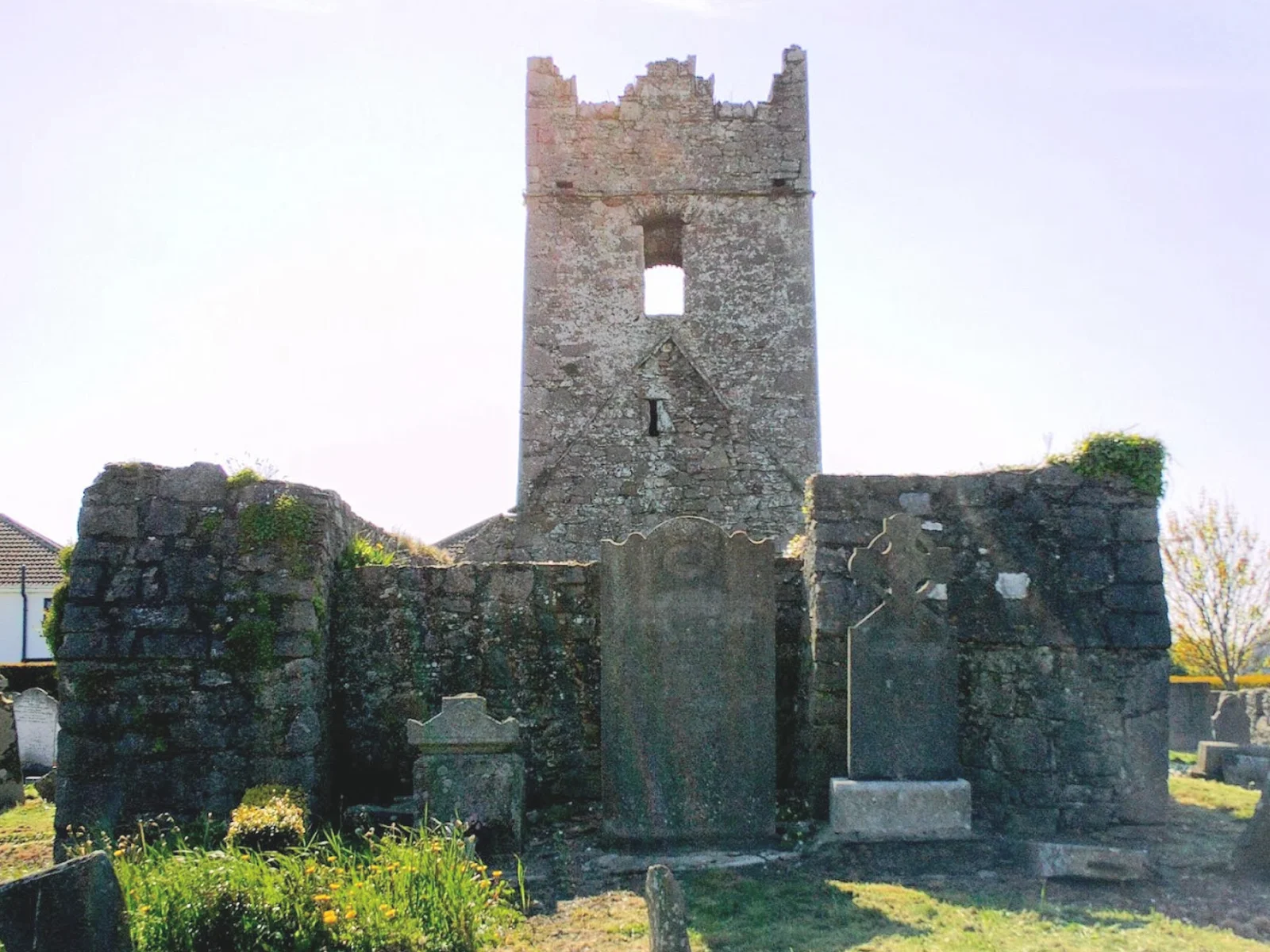
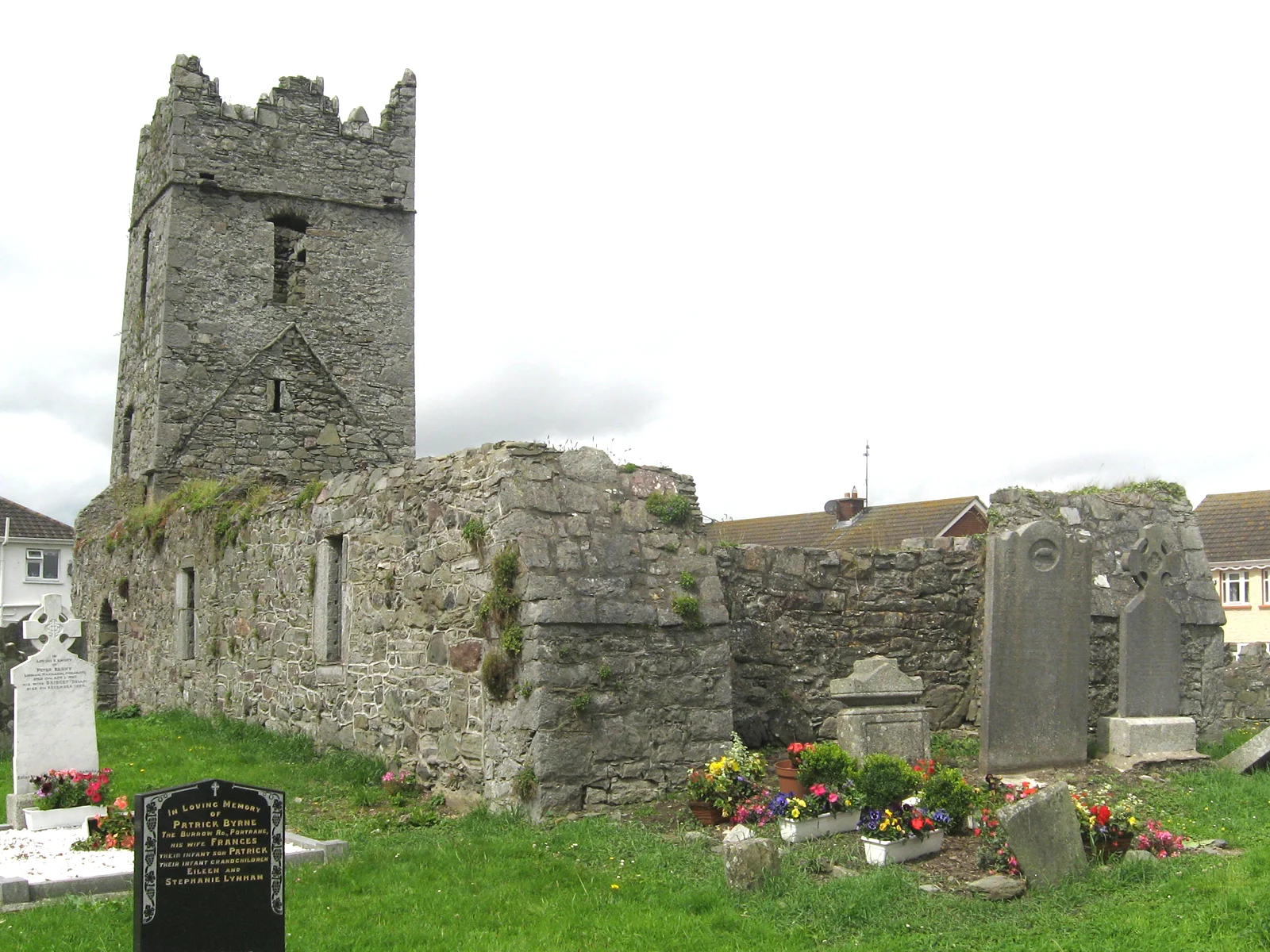
The standing remains within the graveyard consist of a simple nave and chancel church with a three-stage tower with stepped battlements to the west end. It is constructed of sandstone and limestone rubble with dressed quoins. A segmental headed opening to the west end of south wall gives access to the nave. There are square-headed openings with dressed stone surrounds with bar holes to the east end of south wall of church. The scar of a pitched nave roof is visible on the east wall of the tower. The tower has a two light window to the ground floor and segmental headed openings to the upper floors.
General Description
Rectangular graveyard bounded by snecked and random rubble limestone wall with unusual curved parapets along northwest, east and west sides. The parapets on the other sections of the wall have been rebuilt in a similar style. The are extensive views over the coast and Lambay Island. The graveyard contains 18th, 19th and 20th century headstones and free-standing crosses. There are many undecorated markers which may be earlier in date. There is burial to the interior of the church. There are reused architectural features throughout the graveyard. A number of the headstones have IHS or Lamb of God motifs. Many of the later plots are bounded by low stone or concrete kerbing. One of the earliest headstones is a simple stone pillar inscribed "1743 IHS Patt Mackian". There is another stone decorated with an IHS motif and cross which has an unfinished inscription.
Surveys: APMDI Journal Vol.1 p342, Vol.2 p473, Vol.12 p143. M. J. S. Egan Vol.7 p51-68
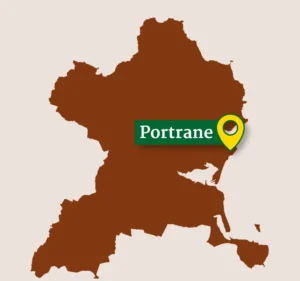
Directions to Portrane
Tip: directions will open in a new tab. You may need to enter your starting location manually.