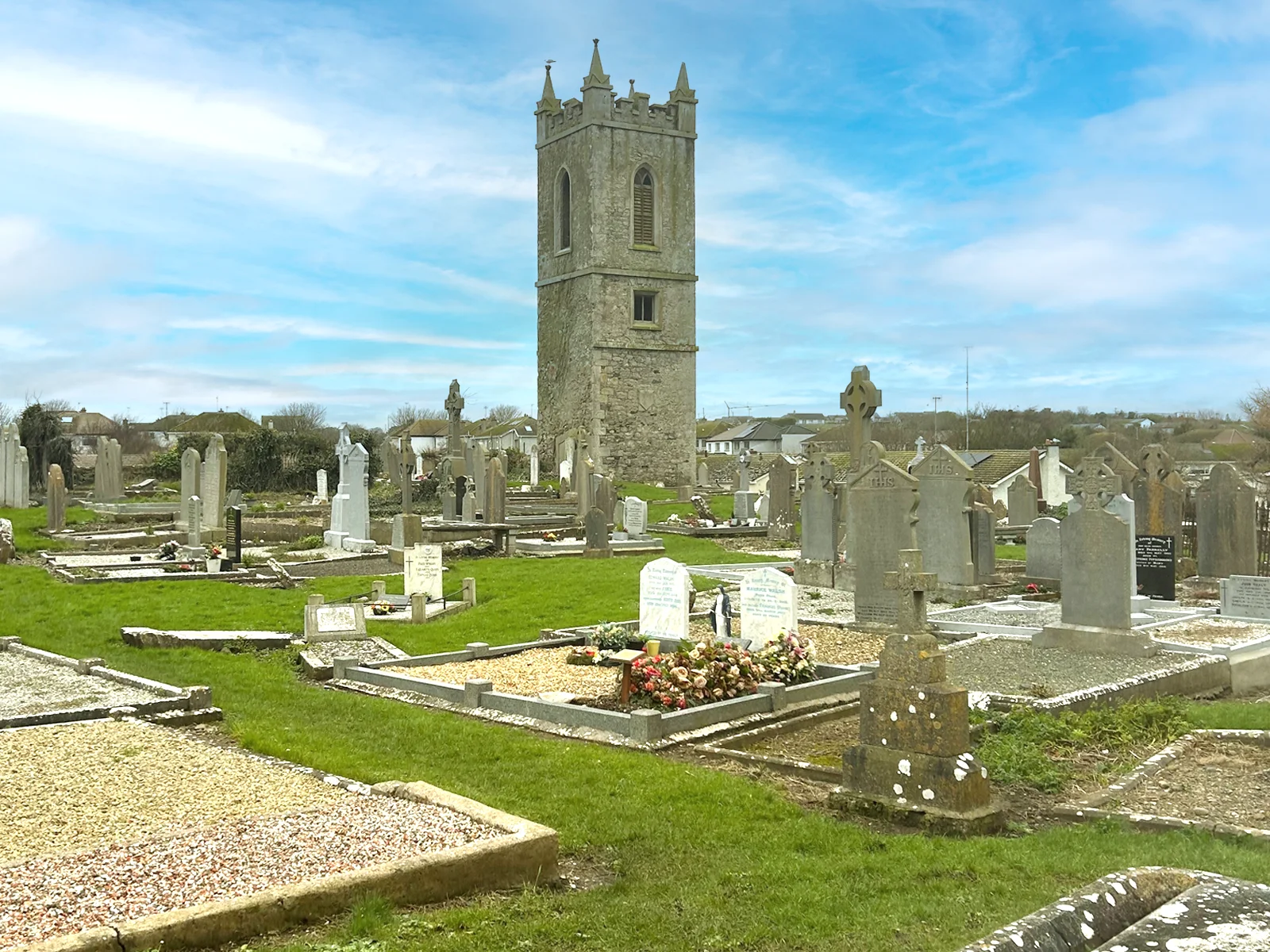
Holmpatrick Cemetery
Holmpatrick Cemetery is located at the southeast end of Skerries village. The upstanding structures on the site replaced a later medieval church.
Historical Context
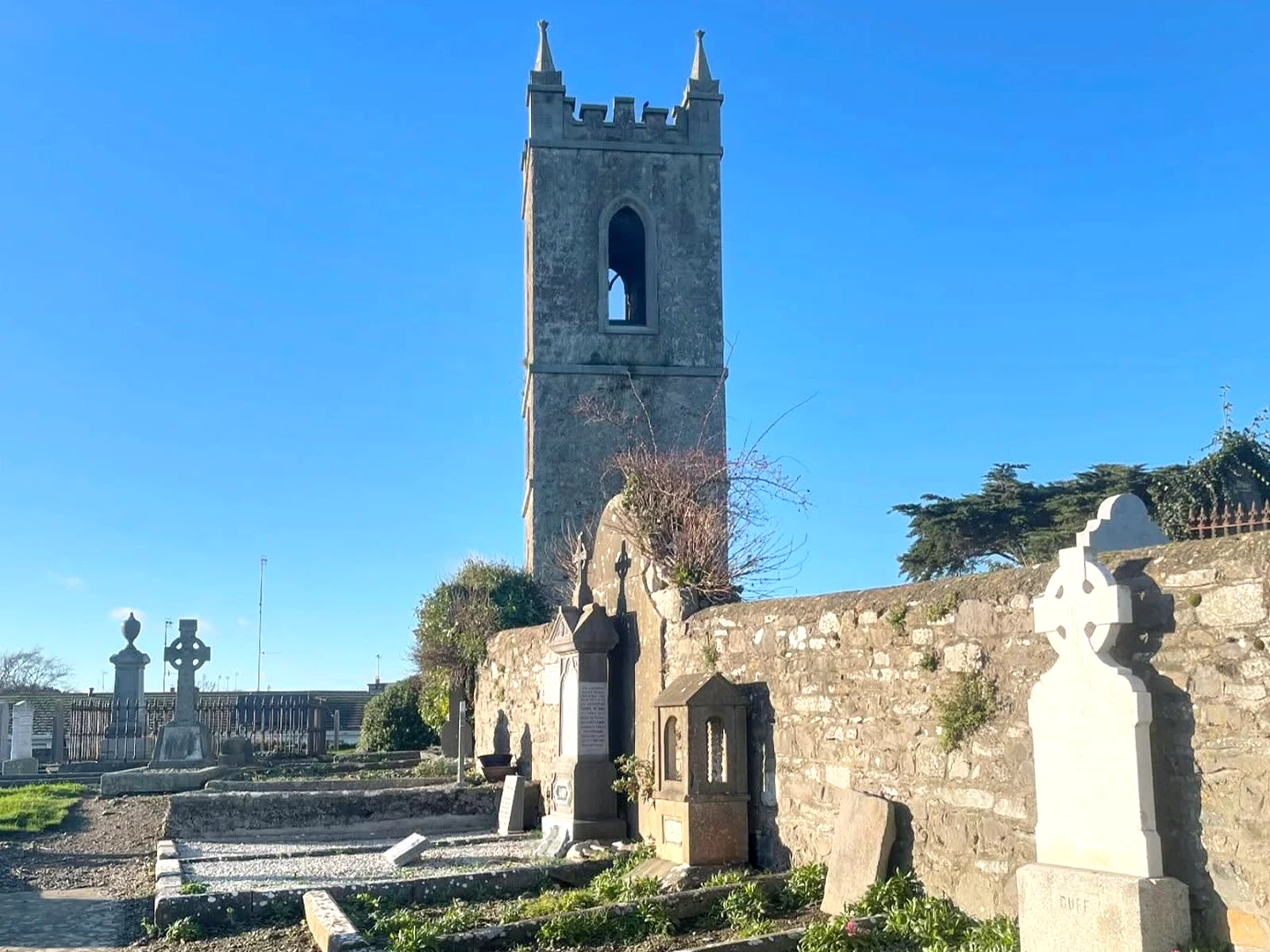
Holmpatrick is a walled graveyard located to the rear of a Protestant Church, on the site of a medieval priory. The Priory was originally founded in the 6th century AD on Inis Patric, but was moved to the mainland c.1220. Although the medieval buildings are no longer extant, 7 fragmentary, medieval line impressed tiles were found in a grave and were probably associated with the priory. The graveyard, which is situated on high ground, is spilt into three levels, the upper of which was probably once the site of the medieval priory. This upper layer also encompasses the oldest burials and the remains of the church bell tower erected in 18th to 19th century. The church of Holmpatrick to the north of the site appears to have been rebuilt in 1868.
Notable figures to have been buried in Holmpatrick Graveyard include Peter Manne, whose gravestone is situated near the south face of the bell-tower. Manne was the last prior of the Augustinian Priory of Holmpatrick (d.1520). Other notable monuments include one commemorating Richard de la Hoyde of Loughshinny (d.1587) and another to Elizabeth Finglas, the wife of Thomas Hussey of Holmpatrick (d.1577). Members of the Skerries Coastguard crew died during a rescue attempt after the wreck of the Sarah.
Archaeological and Architectural Features
The standing remains within the graveyard consist of a square tower. The tower was erected in 1819 as an addition to the church building which is now gone. It is a two stage crenellated tower. The walls are roughcast rendered and there is the scar of the church nave on the east wall. There are Tudor arched openings with dressed stone surrounds in the east and west walls of the first floor of the tower. There are two 16th century slabs dedicated to Peter Manne, last prior to the Augustinian Priory of Holmpatrick.
General Description
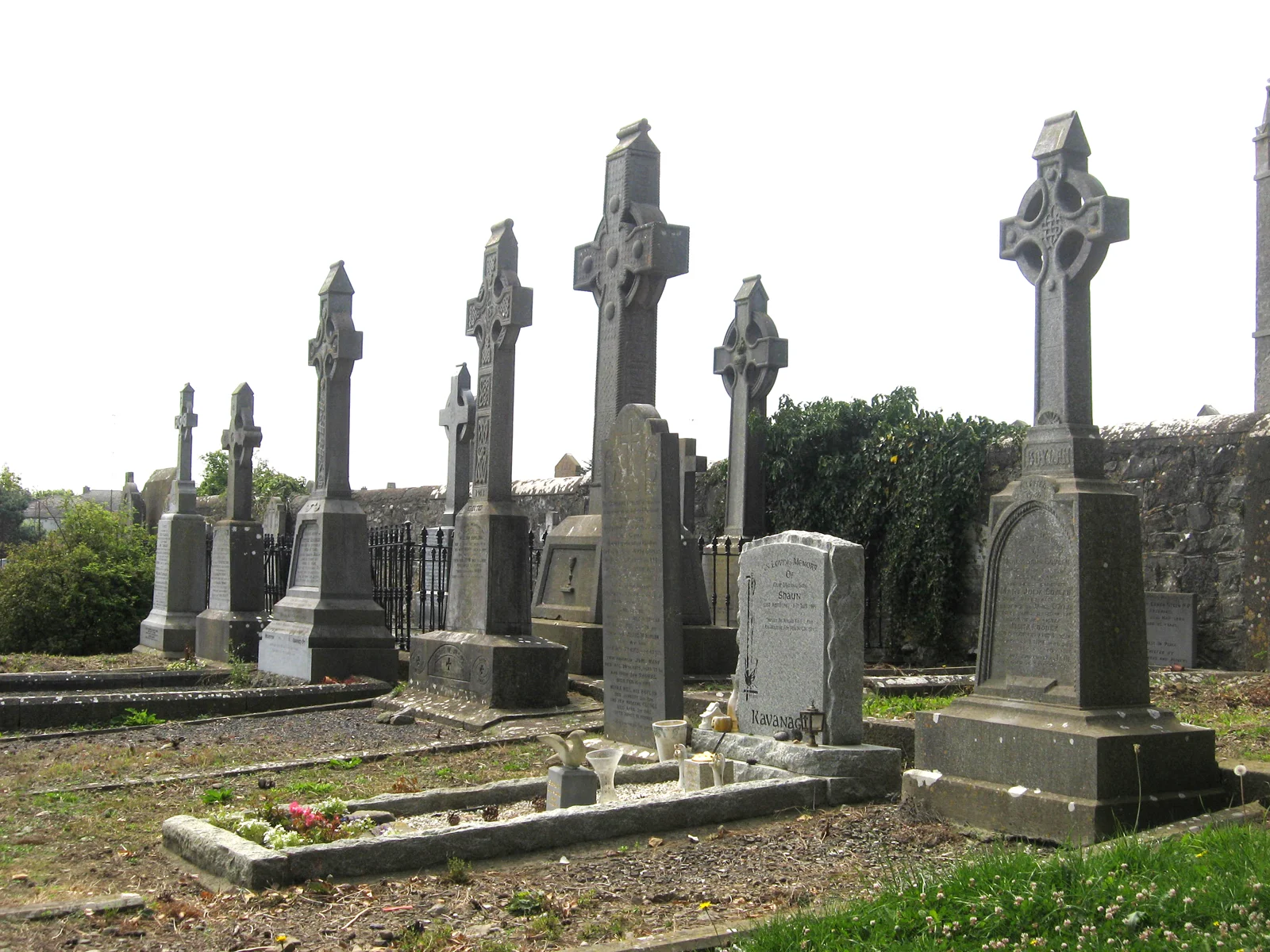
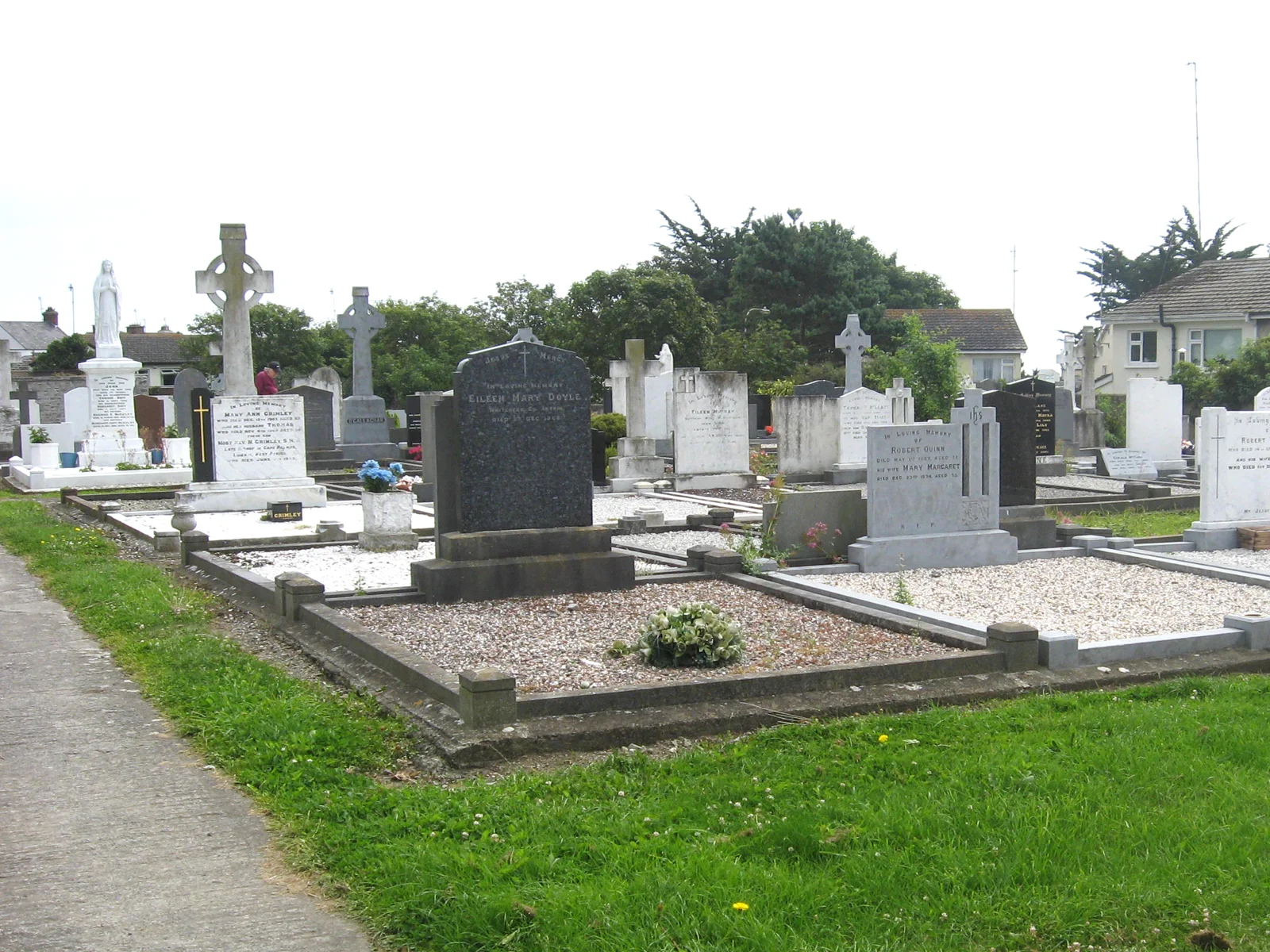
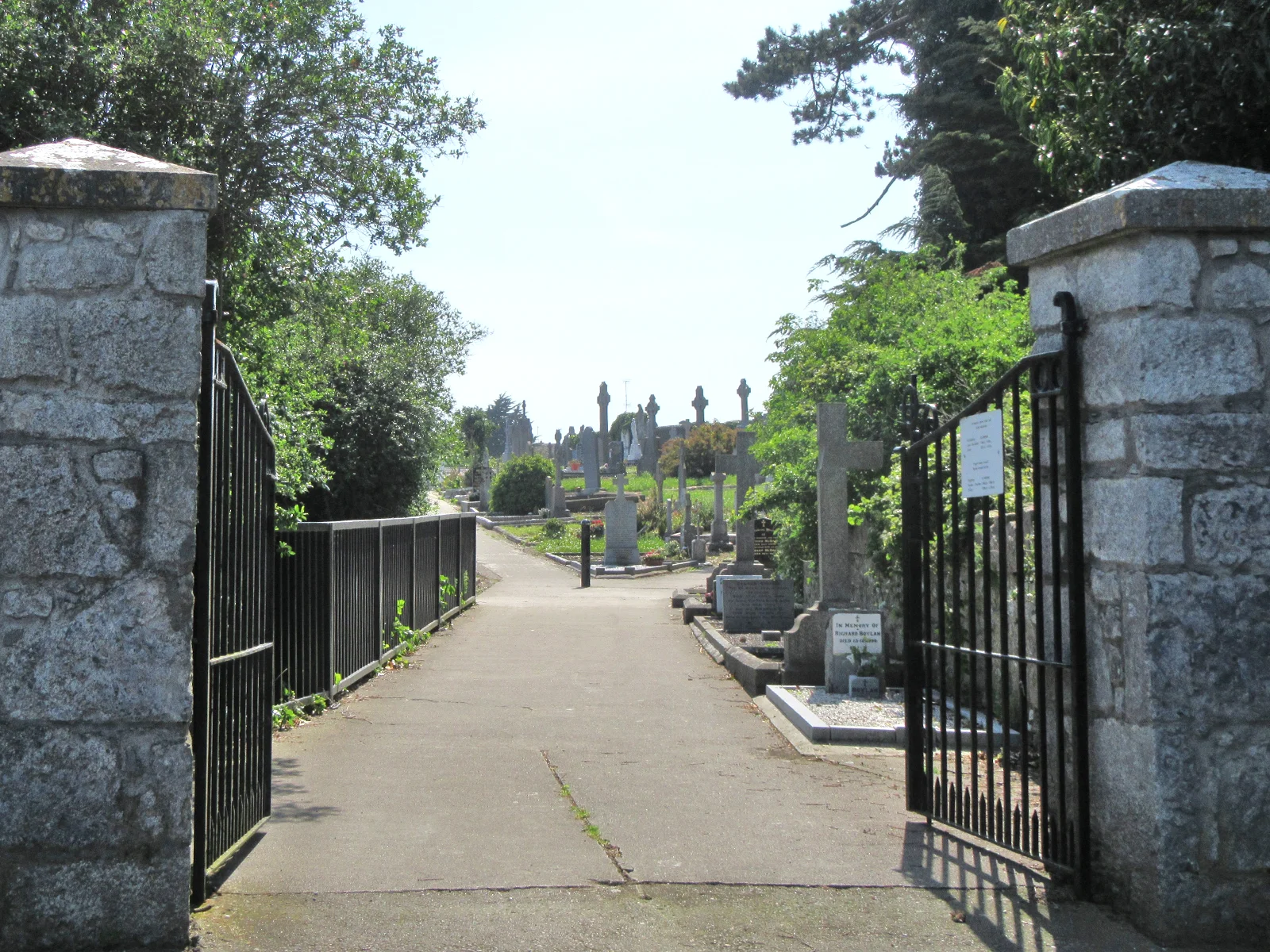
Sub-rectangular graveyard bounded by rubble limestone wall. The entrance is marked by squared rubble limestone pillars with cast-iron vehicular and pedestrian gates. The graveyard is on three levels. As late as 1837 the graveyard consisted only of the walled area around the tower known as the "Old Graveyard". The "New Graveyard" was constructed around this in the 19th century and has been extended in the 20th century. While the graveyard contains a number of notable 16th and 17th century headstones, the majority of the grave markers date to the 18th, 19th and 20th century. The modern sections of the graveyard contain rows of low headstones of limestone or marble with individual timber crosses. There is a significant memorial dedicated people who died in the Easter Rising between 1916 and 1922. There is a standard military style headstone which is dedicated to an unnamed victim of the First World War "A Seaman of the Great War, Royal Navy 18th March 1918".
The slab dedicated to Peter Manne is inscribed with a Latin inscription which has been translated as "Here lies Peter Manne formerly Prior of the House on who soul God have mercy. He died in the year of Christ 1520.". The Delahoyde stone is located at the base of the tower beside the Manne stone and commemorates Richard Delahoyde of Loughshinny who died in the late 16th century. A hole in the stone is said to have been used to cure warts. A slab dedicated to Elizabeth Finglas who died in 1577 forms part of a table tomb to the north of the tower. It is decorated with a crest and Latin inscription and has been reused. One of the earliest headstones in the graveyard is a late 17th century example dedicated to Richard Farrel is simply inscribed with an IHS and cross his name and 1691. It may be a reused architectural fragment. The graveyard contains grave markers dedicated to the victims of shipwrecks that occurred off the north Dublin coast including the grave marker of Thomas McClerey which reads "Here Lieth The Body of Thomas McClerey Aged 16 Years Son to John McClerey of Portaferry one of the unfortunate Crue of the Savage of Portaferry that was wrecked at Skerries ye 12th Day of Febry 1756". The stone has a curved top and is decorated with a winged cherub head with floriate roundels.
Fingal County Council is responsible for this cemetery and its records.
Surveys: APMDI Journal i p174-175, ii p294-295, vi p266, vii p338-342, viii p51; Irish Memorials Assoc. Journal xii p307-510. M. Egan Vol.7 p69-230
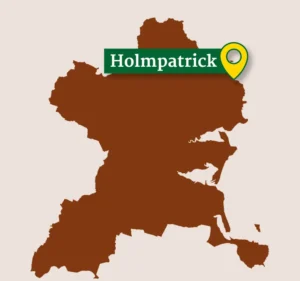
Directions to Holmpatrick
Tip: directions will open in a new tab. You may need to enter your starting location manually.