Garristown Cemetery
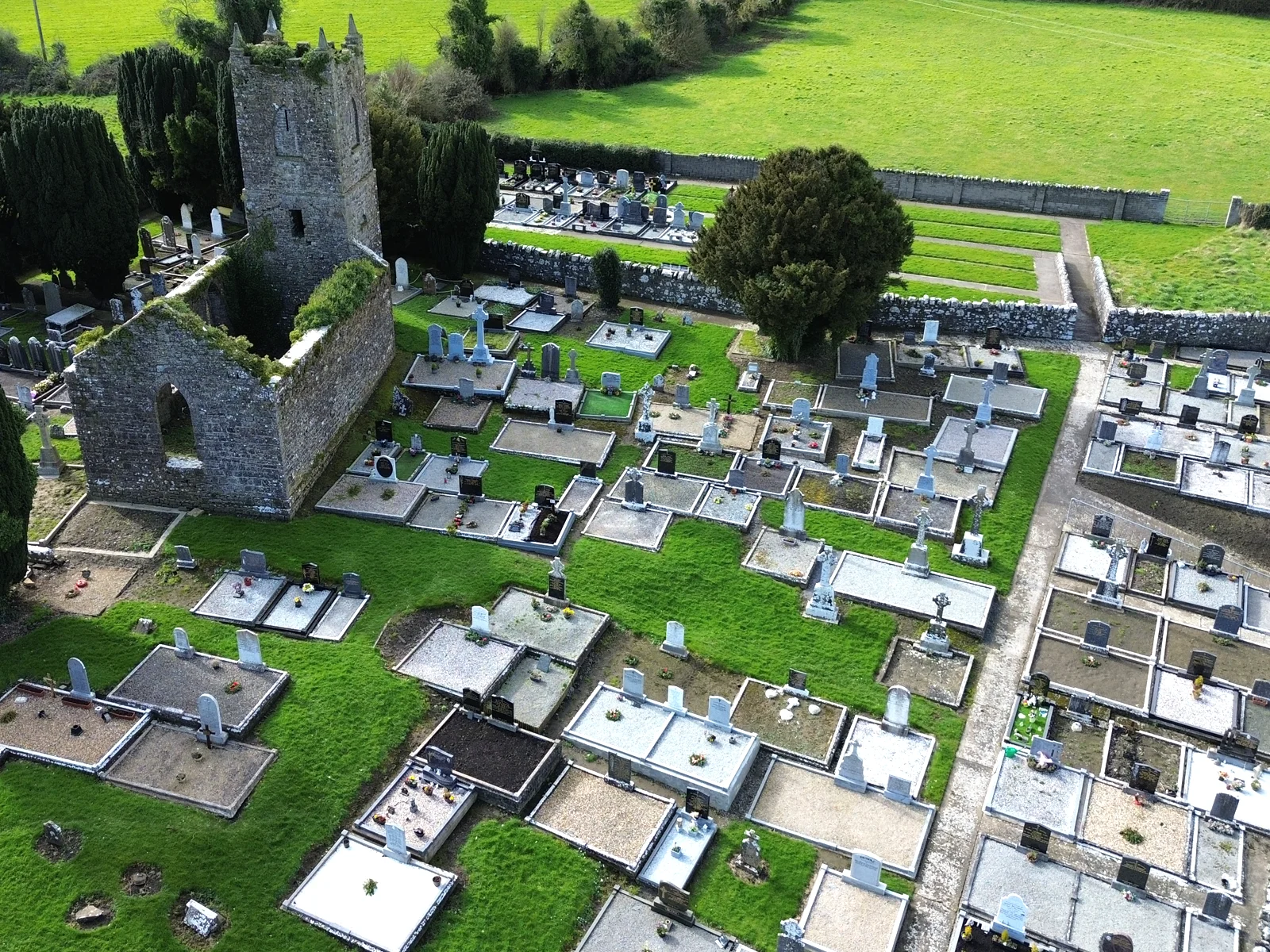
Garristown Cemetery is set on high ground above the village of Garristown to the west of the R130. There are no upstanding archaeological features of early medieval date at the site. It was opened in 1984 and is now maintained by Fingal County Council. Many residents of Dublin City, as well as of Fingal, are buried in this very large cemetery. To reach this cemetery, take the North Strand Road from the City centre, through Fairview, and turning left onto the main Malahide Road, keep straight on this road out towards Malahide, where you will come to Campion Public House, Balgriffin. Take a right turn at the traffic lights here and the cemetery is a few hundred yards on your left hand side. You can also take the No. 42 bus and get off at the bus stop beyond Campion’s and walk across the road to enter by a side entrance gate.
Historical Context
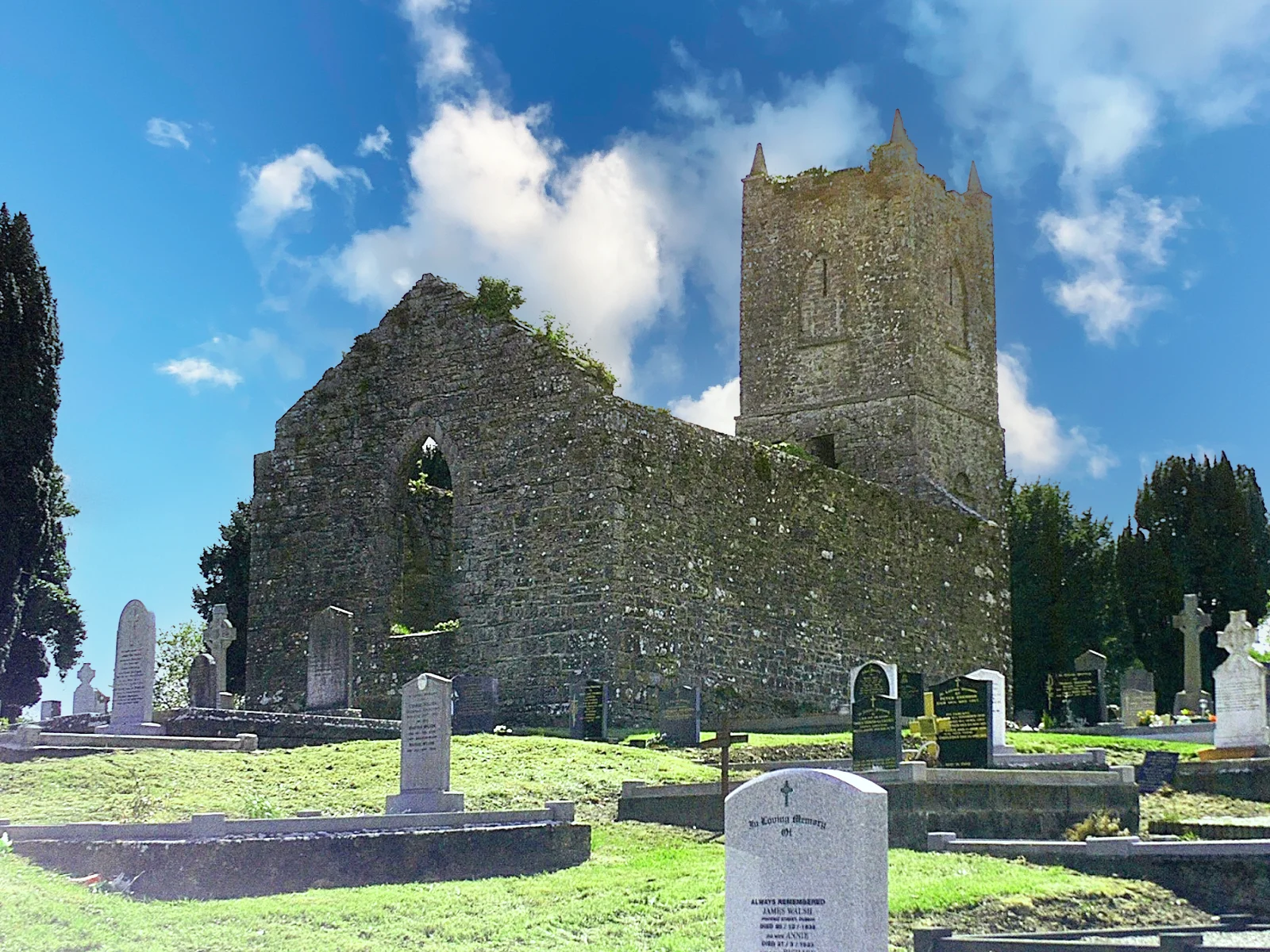
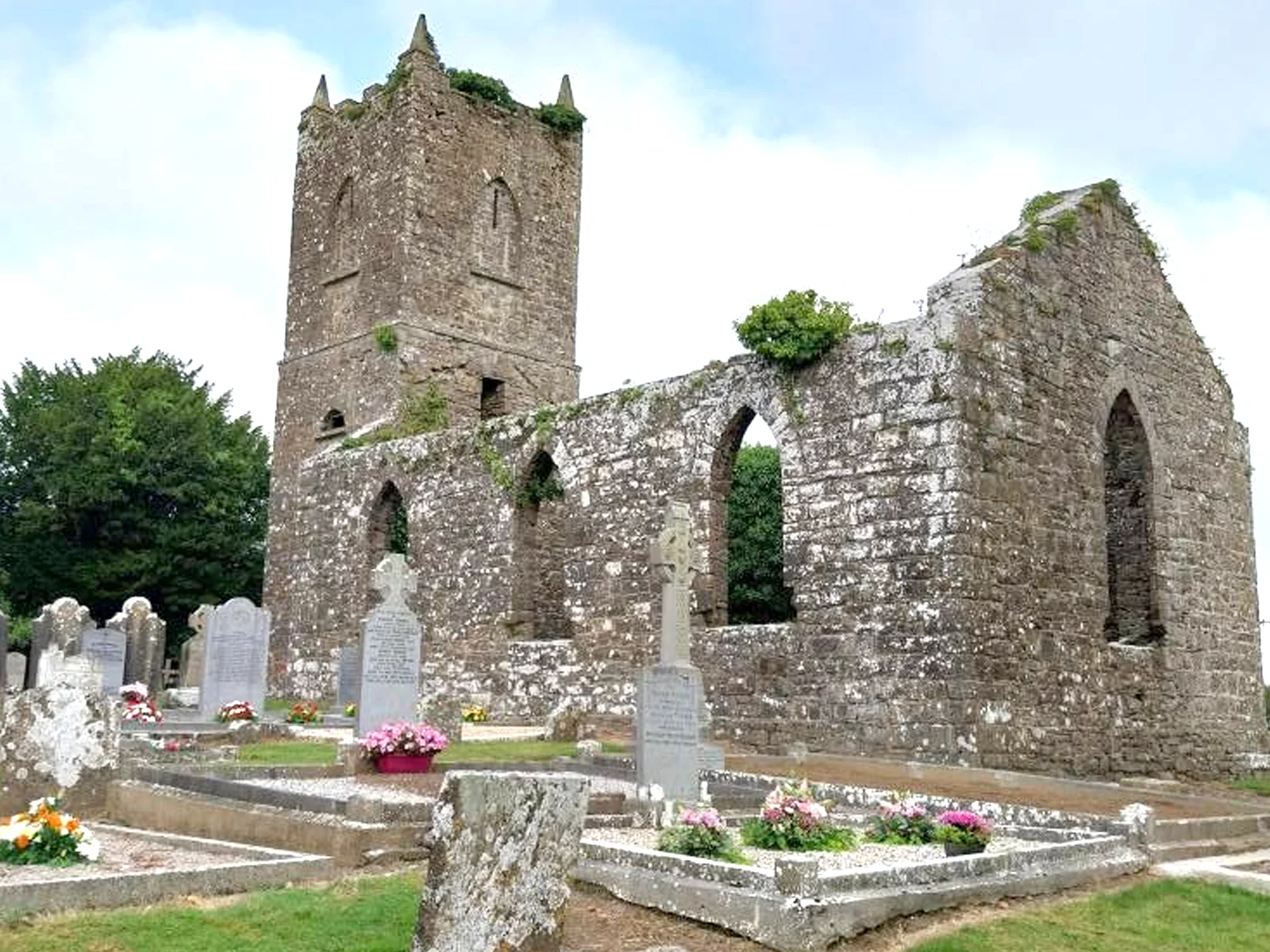
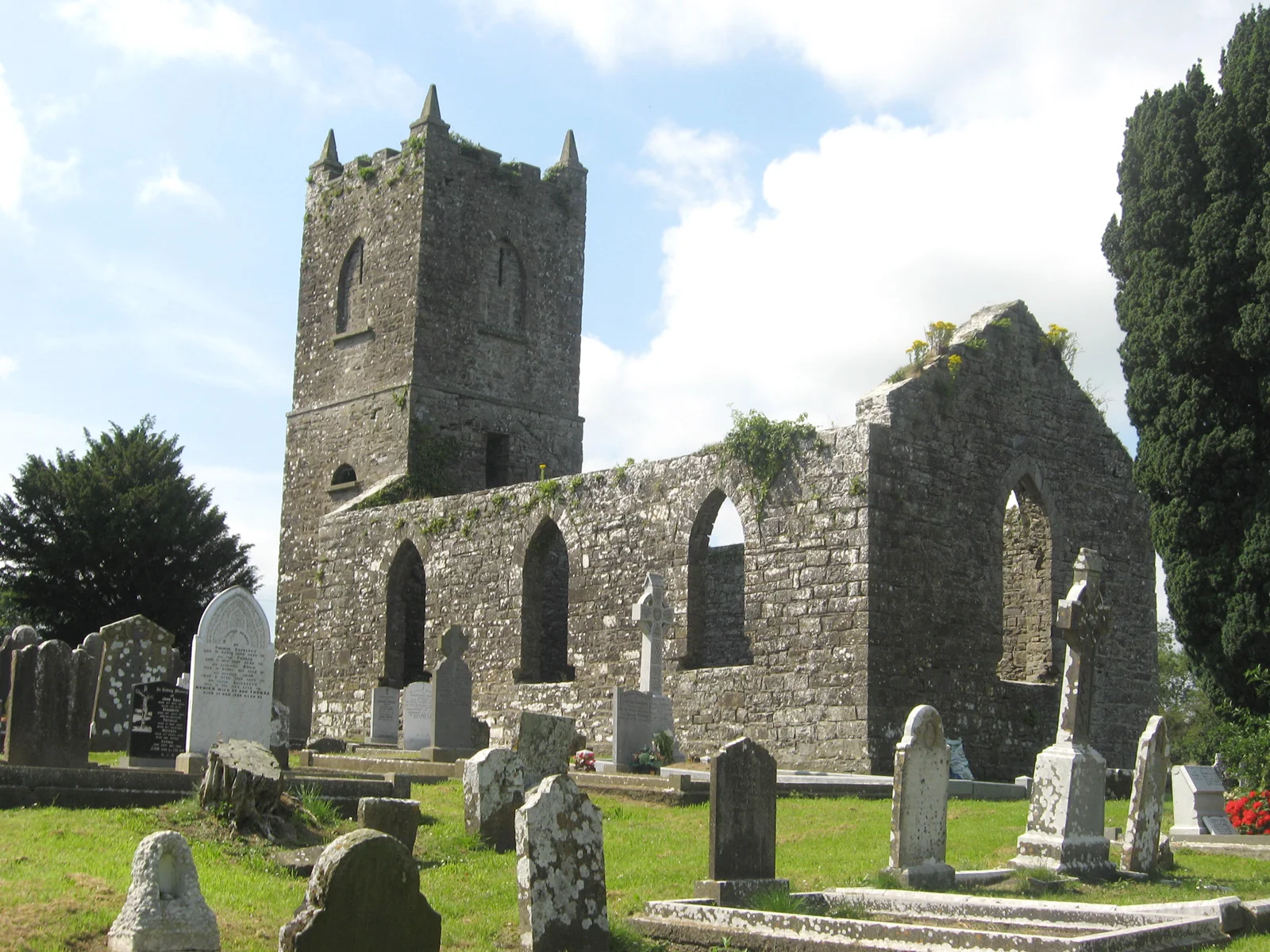
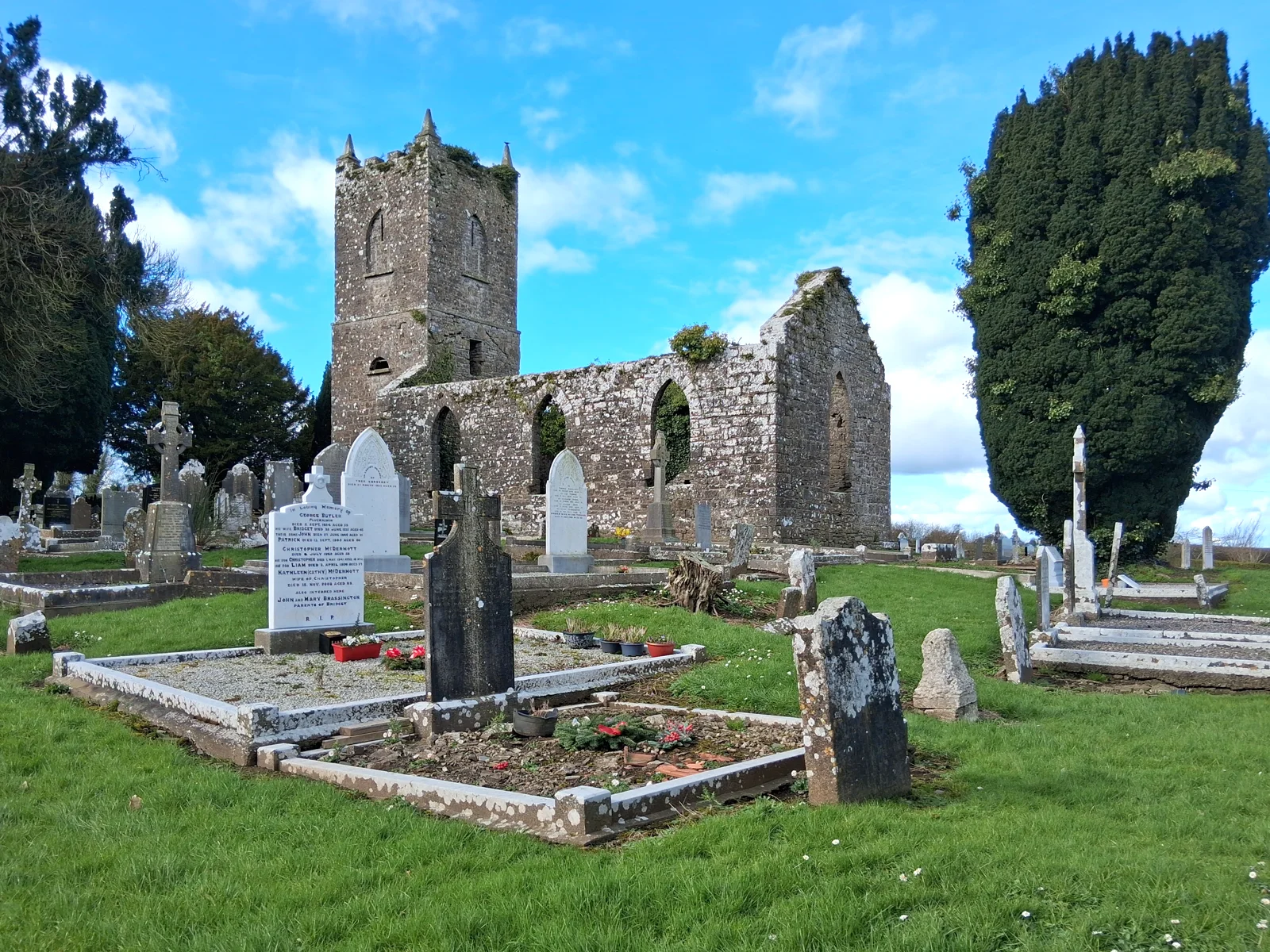
The church of Garristown was dedicated to the Virgin Mary. A reference from 1532 says that it was a possession of the Hospital of St. John of Jerusalem. The present church, which was built around 1814 and is now in ruins, probably occupies the site of the medieval parish church. The graveyard is walled and once contained fragments of a 16th century female effigial slab which has since been removed from the site. Interesting items of archaeological note include a whetstone which has been reused as the top of the step of the style in the north wall of the graveyard.
Archaeological and Architectural Features
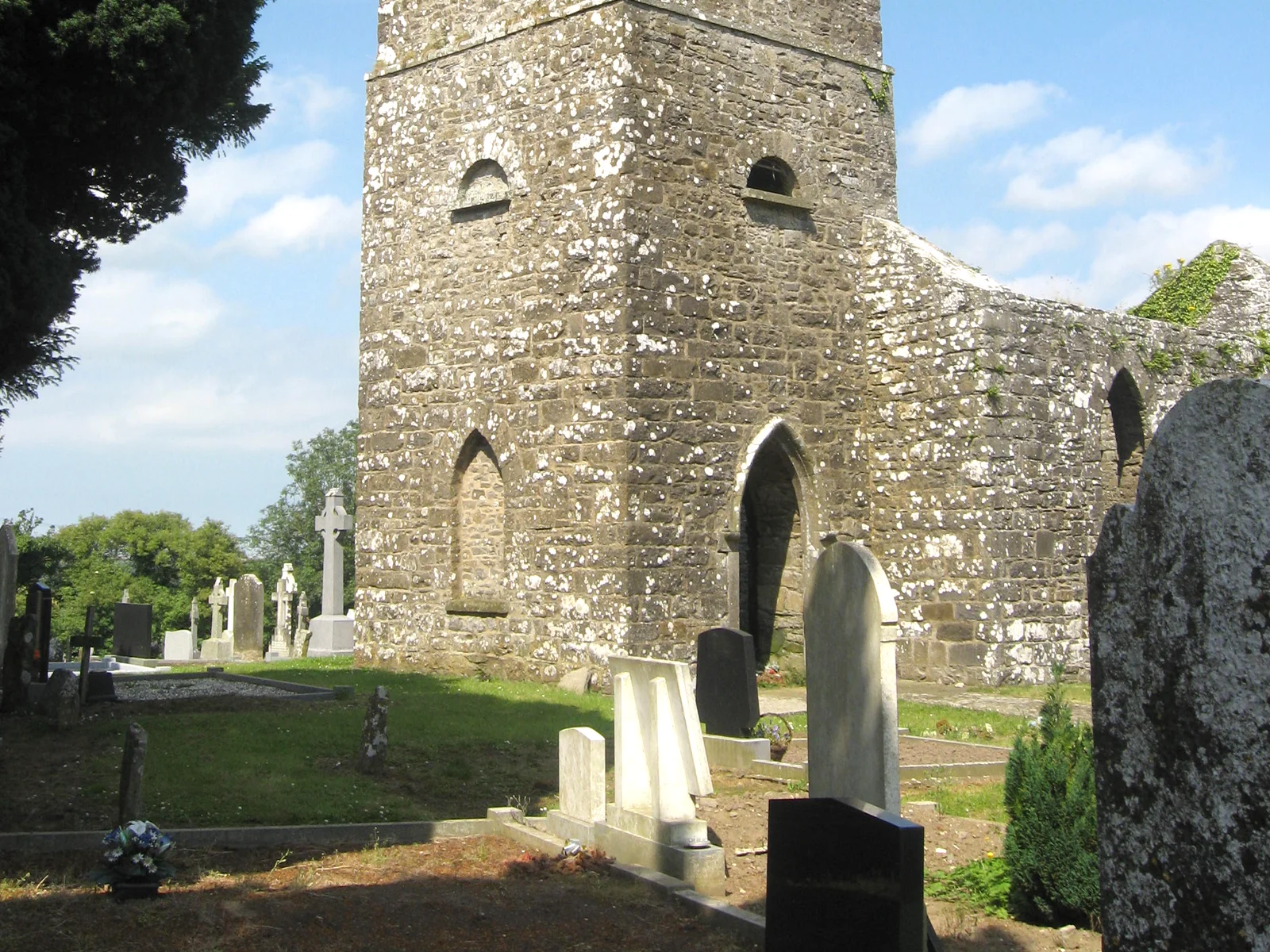
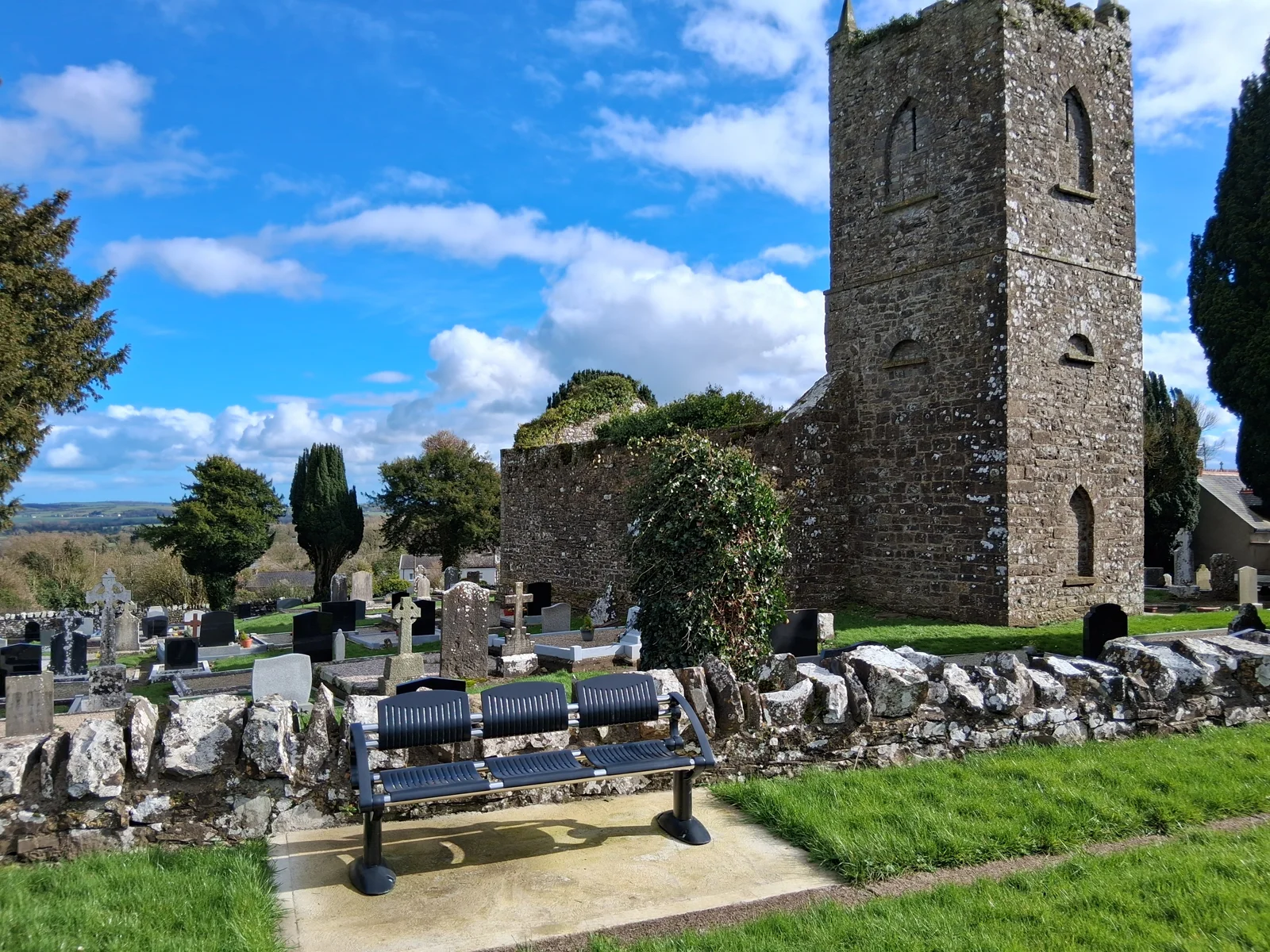
The standing remains within the graveyard consist of an 18th century church with a two-stage tower with battlements to the west end. It is constructed of squared limestone masonry. The tower has pointed arched openings to the ground floor and blind round headed and pointed arched openings to the upper part of the tower. The church has a three-bay nave with pointed arched openings. There is a pointed arched window in the east gable.
General Description
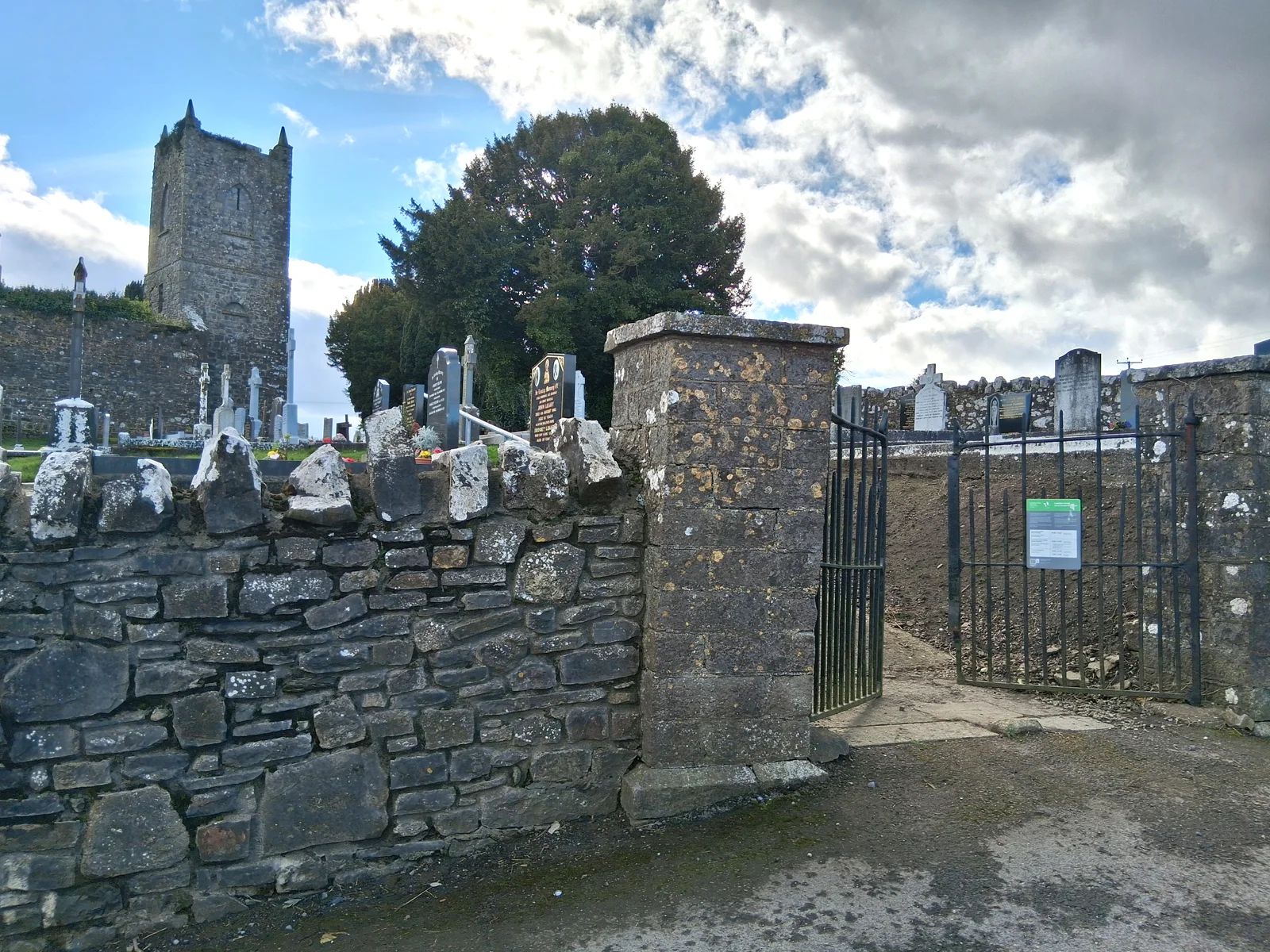
Sub-rectangular graveyard, surrounded by squared rubble limestone with stone coping to west, north and east and squared rubble limestone wall with concrete coping to south. There is a cast-iron pedestrian gate to the south and a whetstone forms the top step of stile in north wall. The ground is gently undulating in places. It is set on sloping ground above the village of Garristown with extensive views of the surrounding area. The graveyard contains 18th, 19th and 20th century grave markers and one 17th century example. They are generally east-facing headstones with individual table tombs. They are carved from limestone, granite and marble. There are undecorated stone markers at the east end of the graveyard. The graveyard contains many grave slabs dedicated to Dublin merchants. There are a number of reused architectural fragments in the graveyard. The earliest visible stone dates to the early 17th century and was excavated during the digging of new plots in the graveyard. It is inscribed as follows "Here lieth the body of Catrine Russel who died the 12th of May 1637 aged 65 years".
Fingal County Council is responsible for this cemetery and its records.
Surveys: JAPMDI xii p223-226; M.J. Egan Vol.5 p58-113
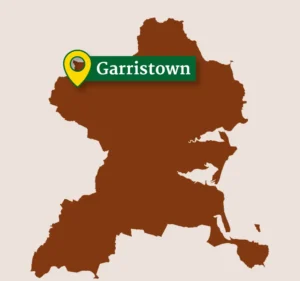
Directions to Garristown
Tip: directions will open in a new tab. You may need to enter your starting location manually.