Ballymadun Cemetery
Ballymadun Cemetery is a very ancient cemetery located on a third class road to the east of the N2. It is located in flat tillage and pasture land. There is no upstanding archaeological evidence of early medieval features at the site.
Historical Context
The church of Ballymadun was dedicated to All Saints and was probably erected before 1275 AD, when it was recorded as having been annexed by the Archbishop of Dublin, Henry de Loundres. The church was in ruins by the mid-17th century and is described in the Civil Survey as ‘walles of ye parish Church’. The ruins of the medieval parish church are located in the west end of the walled cemetery, the surface of which is significantly raised. the church was abandoned following the Dissolution of the Monasteries in the sixteenth century. By 1838, it was a complete ruin, with one wall covered in ivy. The graveyard came under the care of Fingal County Council in 1939. Notable burial monuments include the Russell tombstone which dates to 1816 and features symbols of the crucifixion and angels.
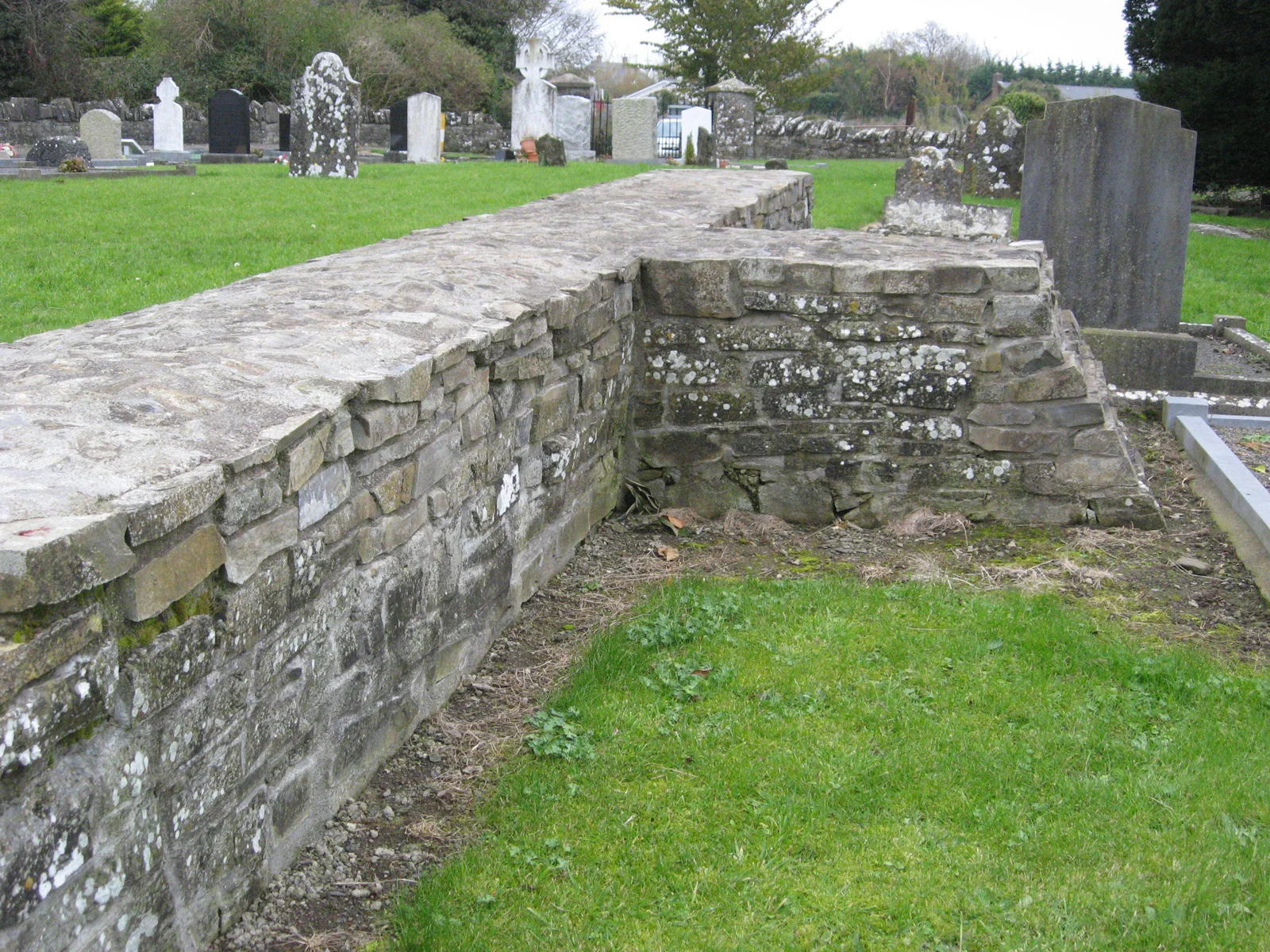
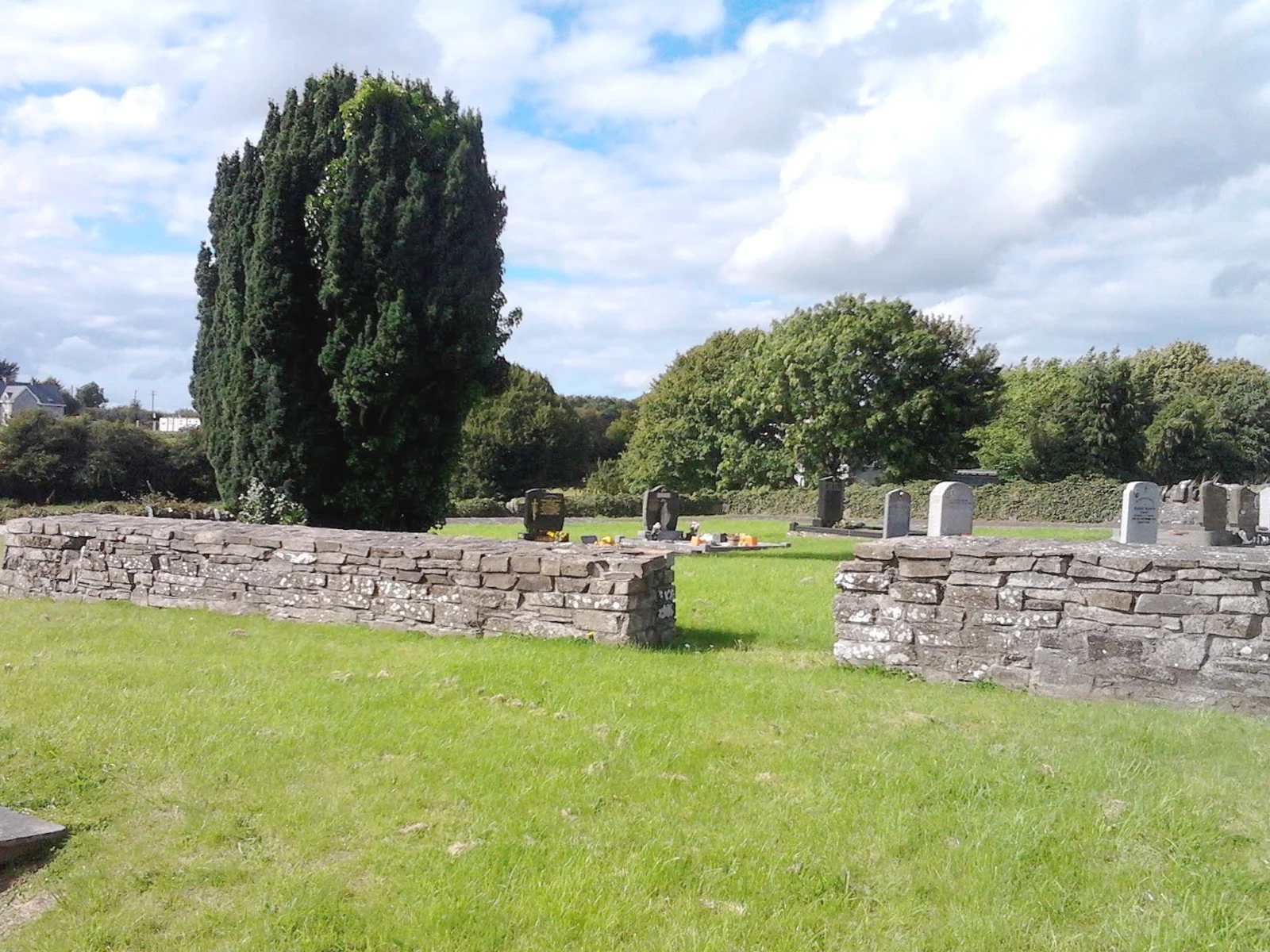
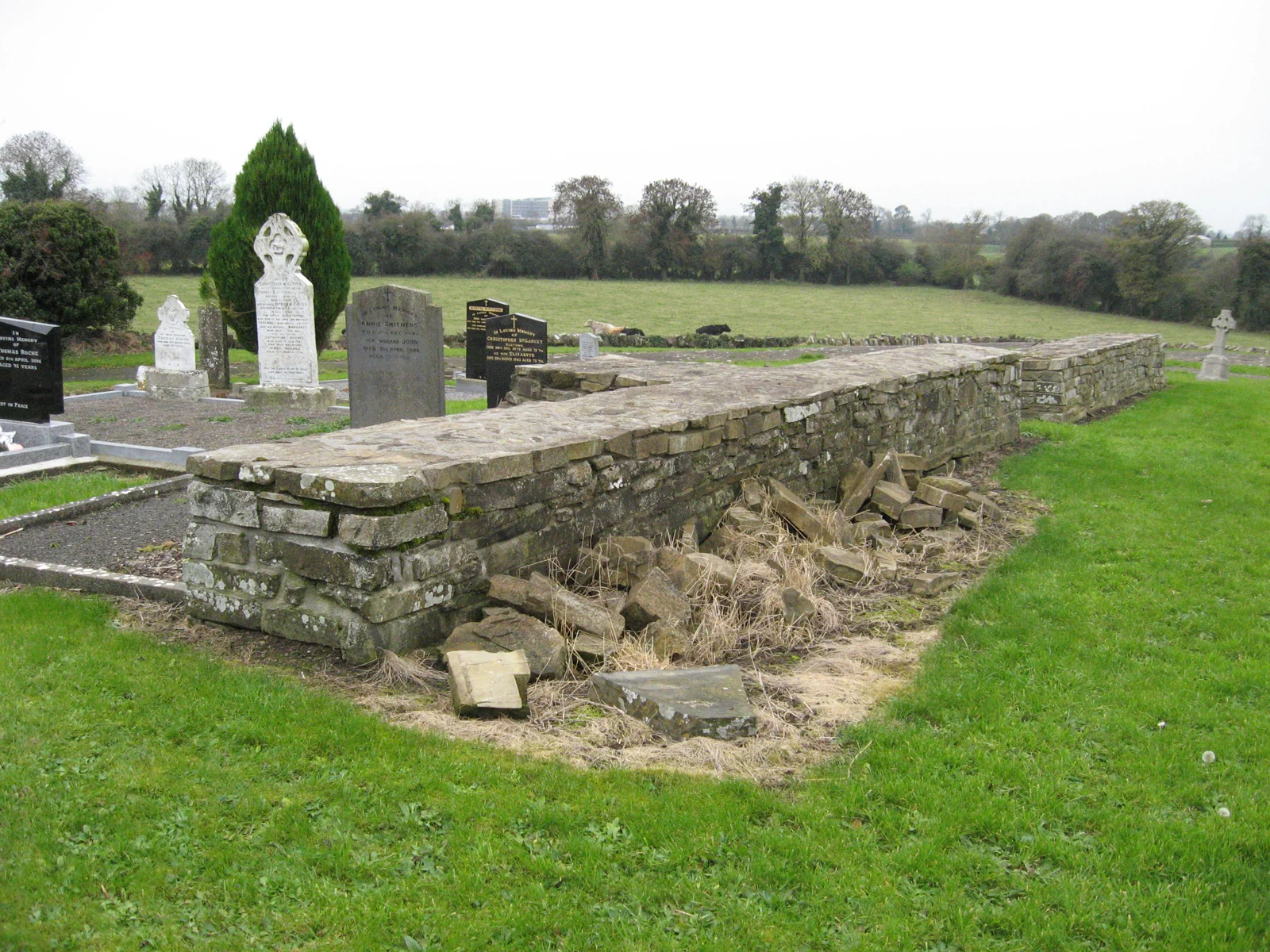
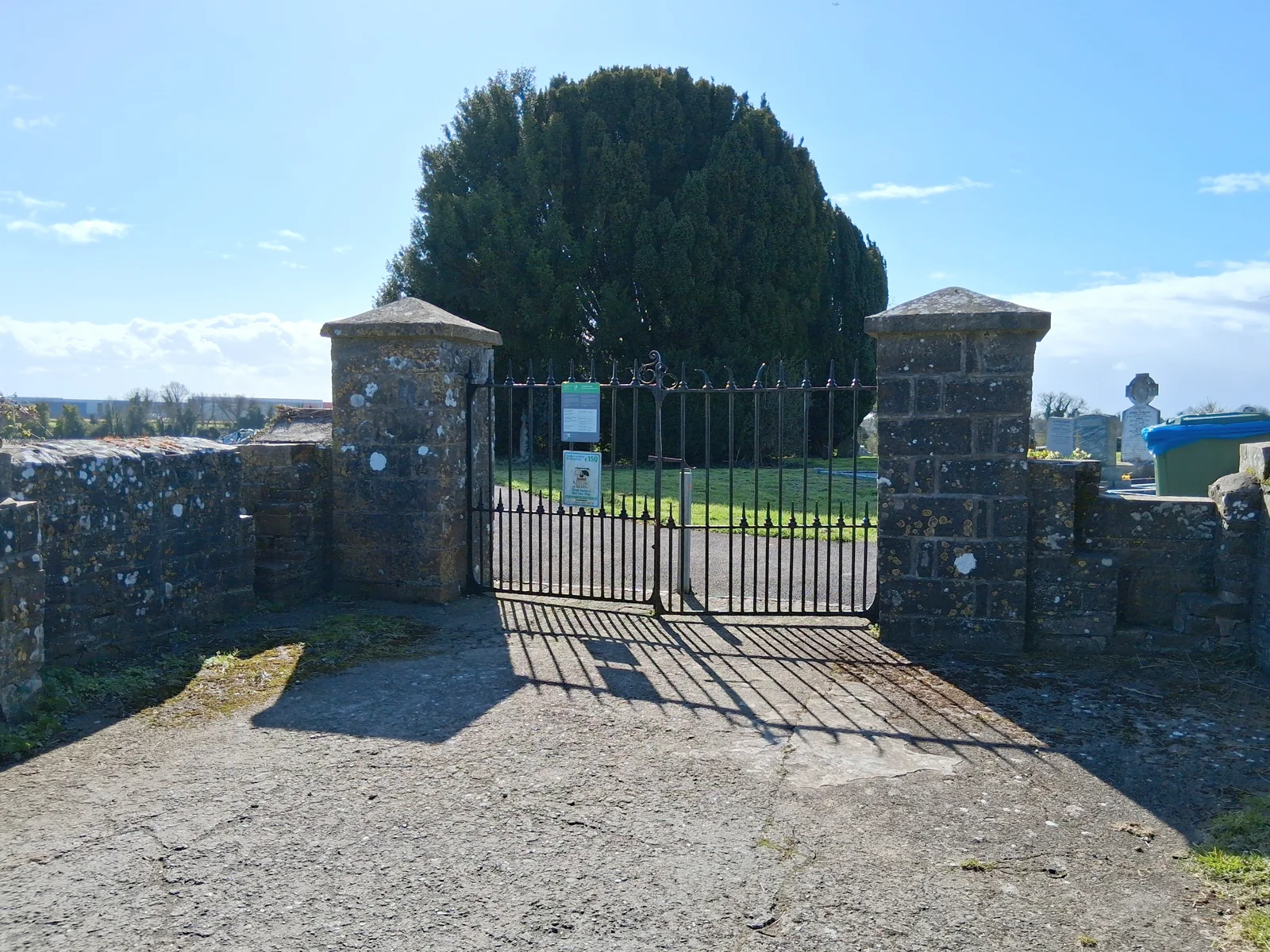
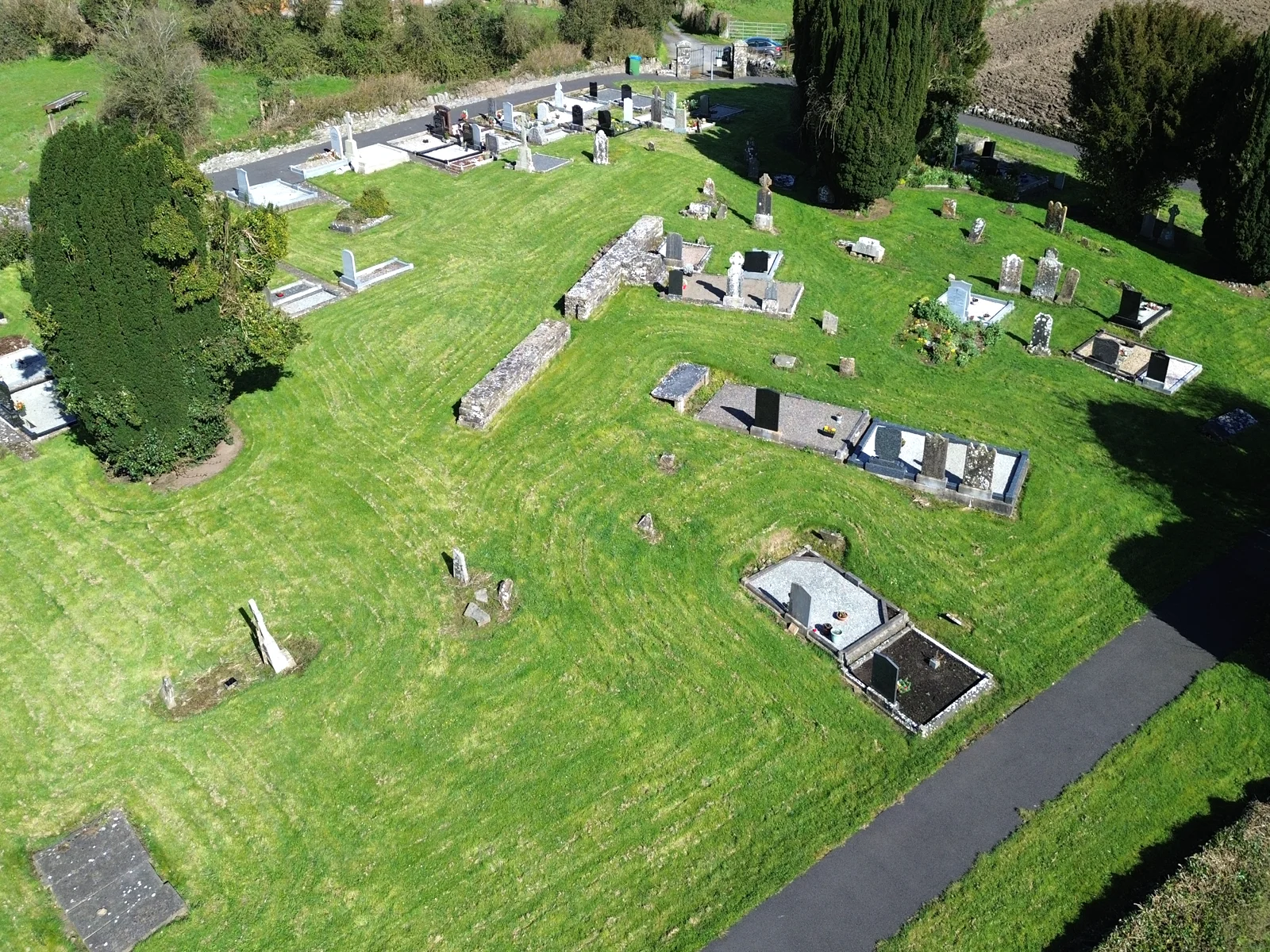
The cemetery lies at the end of a narrow lane beside the Fox Inn pub in the townland of Ballymadun, near Ashbourne. Access is through a gate or a large stone stile. Very little of the church survives today - mainly a section of the south wall standing just over two feet high, with a gap that may once have been the doorway. Capped with flat stone, the wall now serves as a peaceful place to sit and reflect.
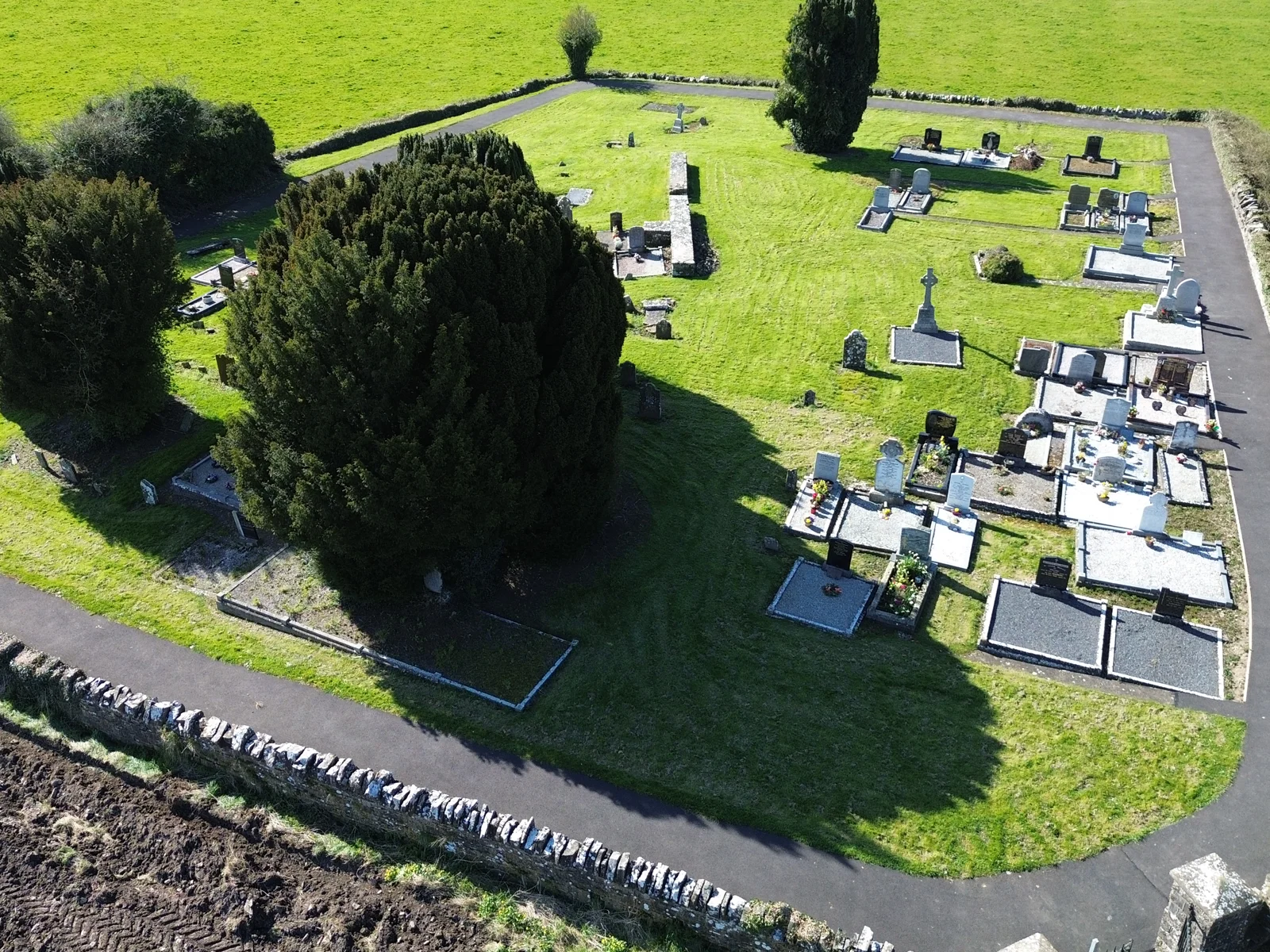
Despite the limited remains, the site is tranquil, beautifully maintained, and notable for its mature yew trees. Yews are common at ecclesiastical sites and can live for centuries, even millennia. Their evergreen foliage, sheltering canopy, and the clear ground created by toxins in their roots made them important ceremonial trees in ancient times. This reverence appears to have continued into the Christian era, with many churches and monasteries established near them.
Although there is little of the church left to see, Ballymadun remains a rewarding place to visit. Its peaceful setting and rural surroundings make it one of the more atmospheric historic sites in the county.
Archaeological and Architectural Features
The cemetery contains the standing remains of the medieval parish church. The south wall which stands to a height of approximately 0.5m. There is an entrance in the west end with rebates to either side and a buttress to the exterior. A low platform to the north corresponds to the original width of the church. This section of the wall appears to have been rebuilt and there is loose masonry on the interior.
General Description
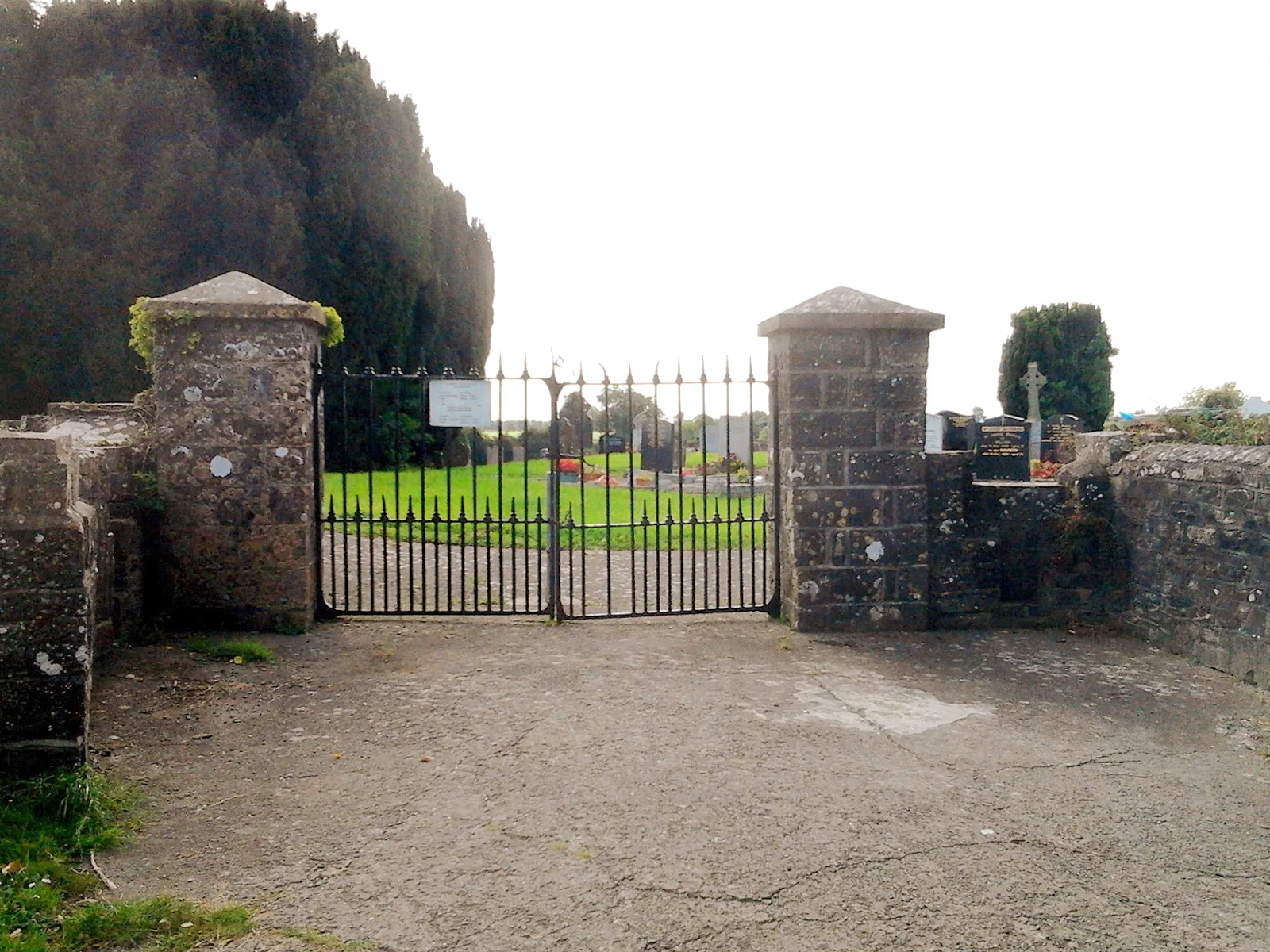
Sub-rectangular graveyard, bounded by squared rubble limestone wall with stone coping. There are flat faced stones in the boundary wall which may originally have been grave markers. The entrance in the northeast corner and is marked by square limestone pillars and cast-iron gates and two stiles. The ground level within graveyard is raised compared to that outside.
The graveyard contains inscribed 18th, 19th, 20th and 21st century markers and a number of undecorated stone markers and possible re-used architectural fragments. The 20th and 21st century markers are located in rows to the north, east and south of the church. The older markers are concentrated to the northeast, east and southeast of the church. Many of the older markers are large limestone headstones with bell-shaped tops. The oldest slab dates to 1729 and is dedicated to Thomas Callan and is inscribed as follows "Here lyeth the body of Thomas Callan who dyed Apl ye 6th 1729 aged 80". The Russel plot has a limestone headstone with bell-shaped top and IHS in a sunburst and is inscribed as follows "Erected by Pat Russell of Ballymadun in memory of his wife Mary Russell". Dr. Egan recorded the earliest headstone as dating from 6th April 1729.
Fingal County Council is responsible for this graveyard and its records.
Surveys: Irish Memorials Assoc. Journal xi p217-221; Dr. Egan Vol.5 p4-23

Directions to Ballymadun
Tip: directions will open in a new tab. You may need to enter your starting location manually.