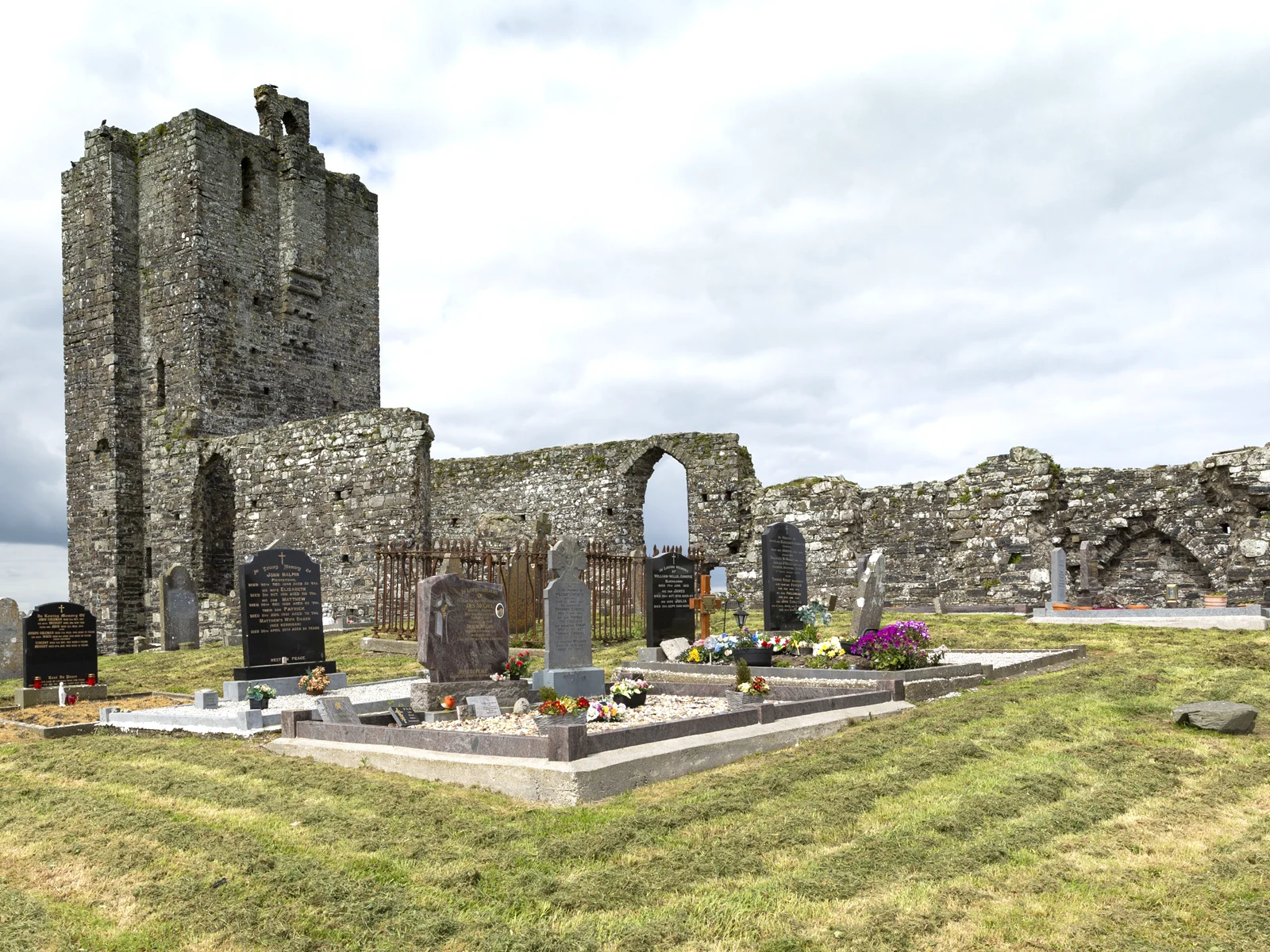
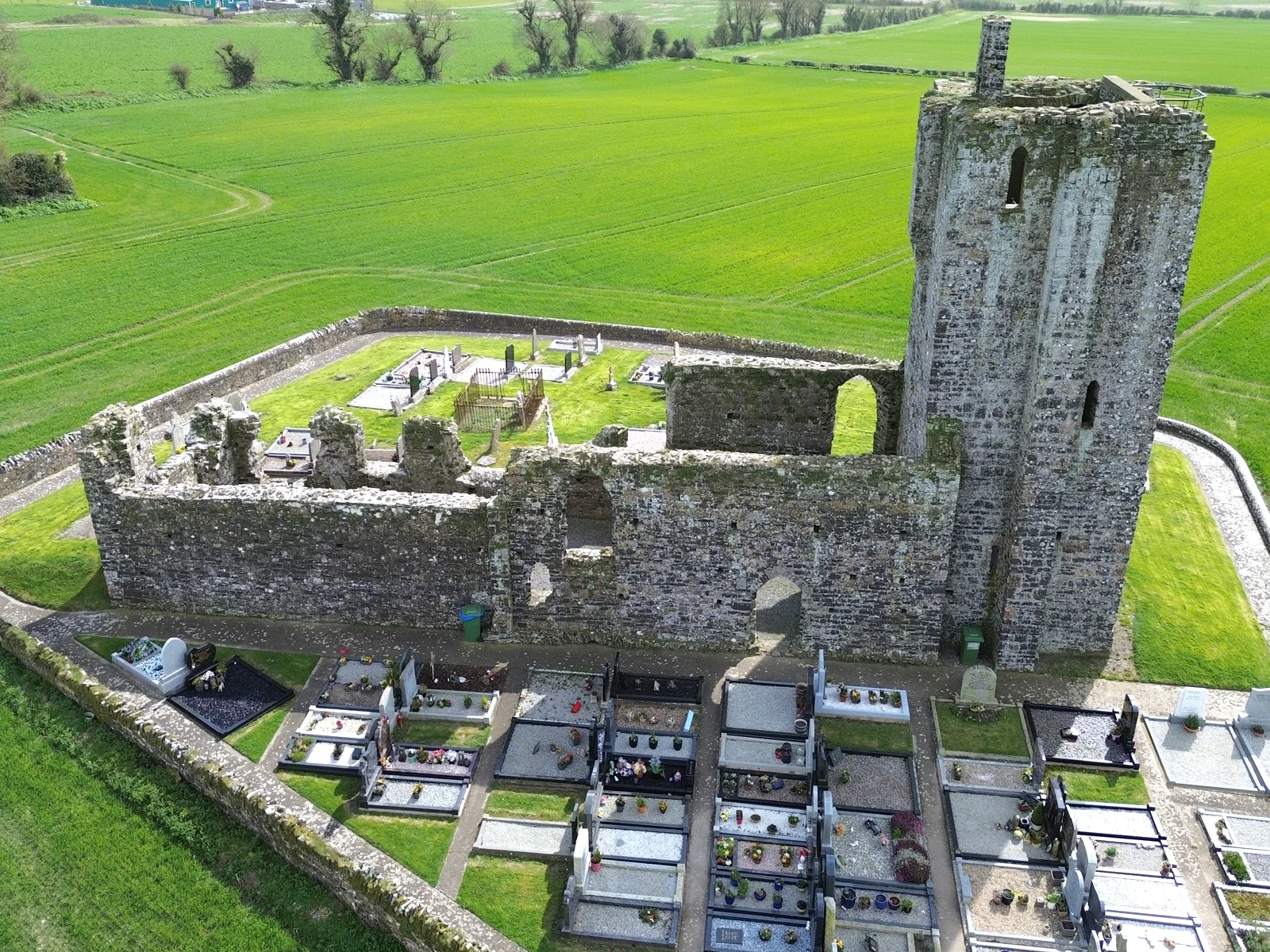
Baldongan Cemetery
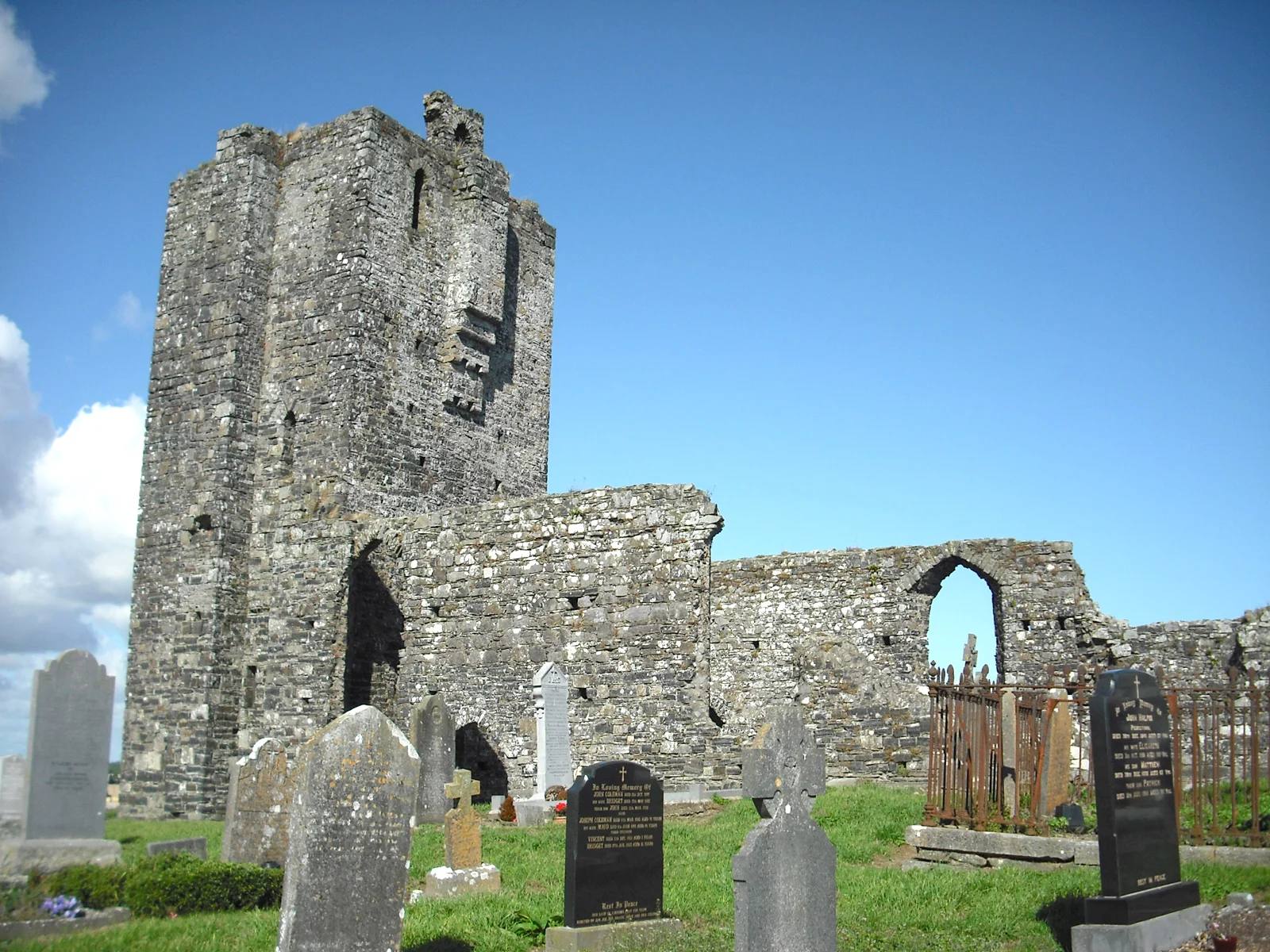
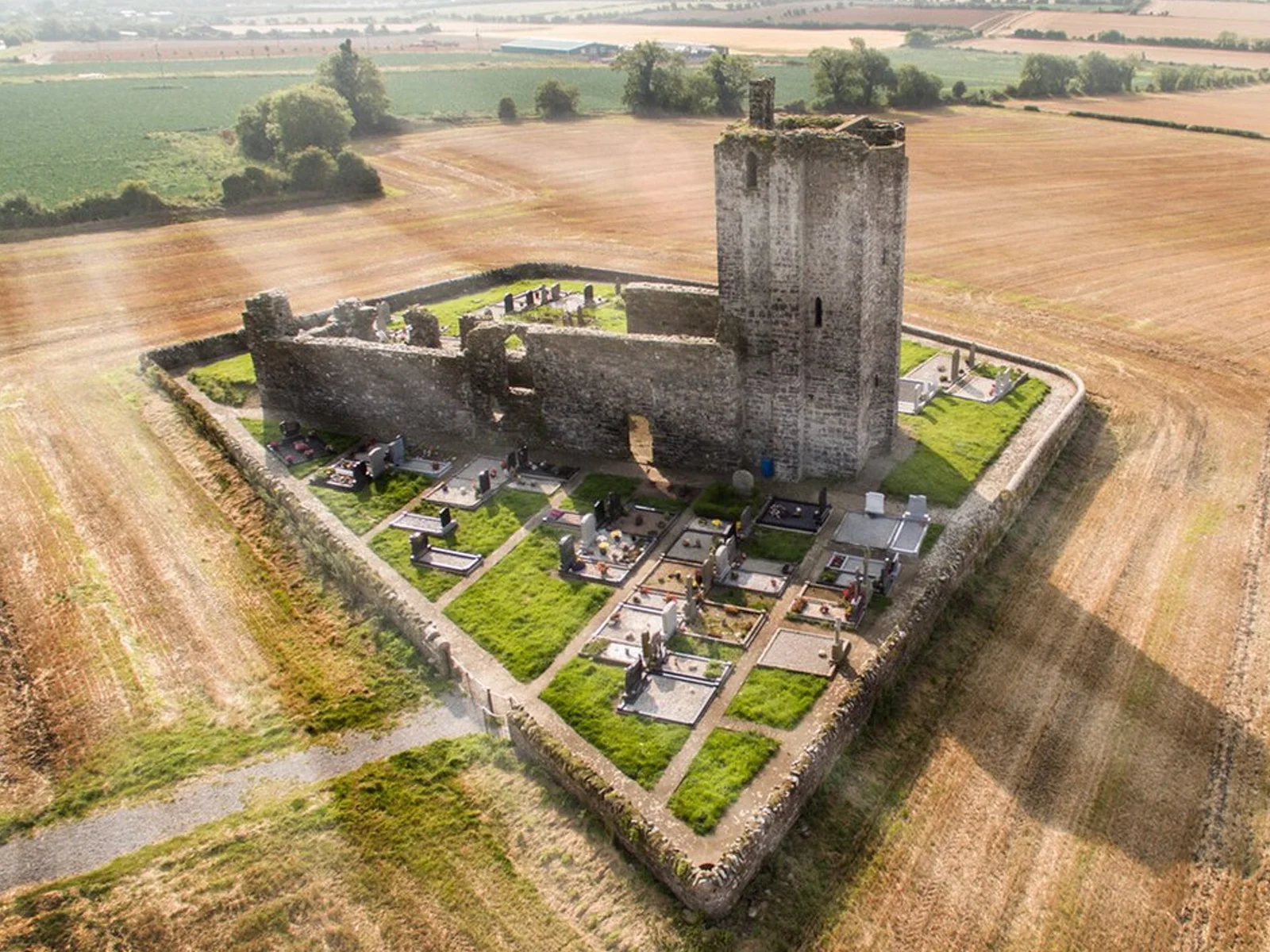
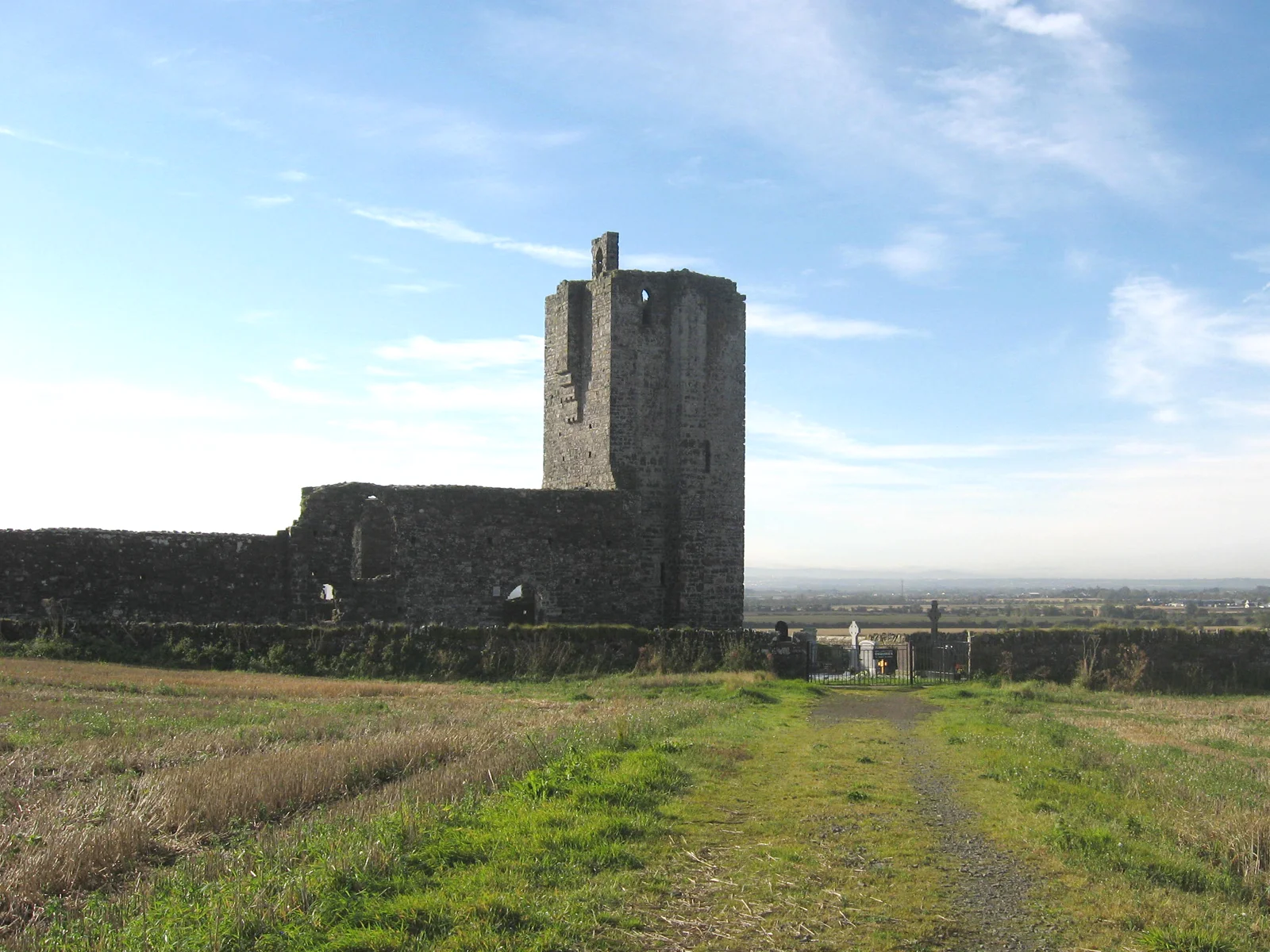
Baldongan Cemetery is located in rolling tillage fields with extensive views to the south. It is located to the south of the Loughshinny Road. There is no evidence for early medieval features at the site. The site of Baldongan Castle is located immediately to the north of the graveyard.
Historical Context
Following the Anglo-Norman colonisation, a large portion of Baldongan was granted to the Knights Templars and they established a religious house there which was dedicated to the Blessed Virgin Mary. This house was later granted by the Archbishop of Dublin to the religious house of Kilbixy. According to tradition the castle at Baldongan was once a friary, at another time a nunnery, and when it was besieged by armed men the nuns are said to have thrown themselves from the windows. After the suppression of the Templars, the lands of Baldongan were granted to the Barnewall's from whom they passed by marriage to the de Birmingham's. In the beginning of the 16th century the castle was the seat of Richard de Bermingham. The estate then passed by marriage into the hands of the Lords of Howth.
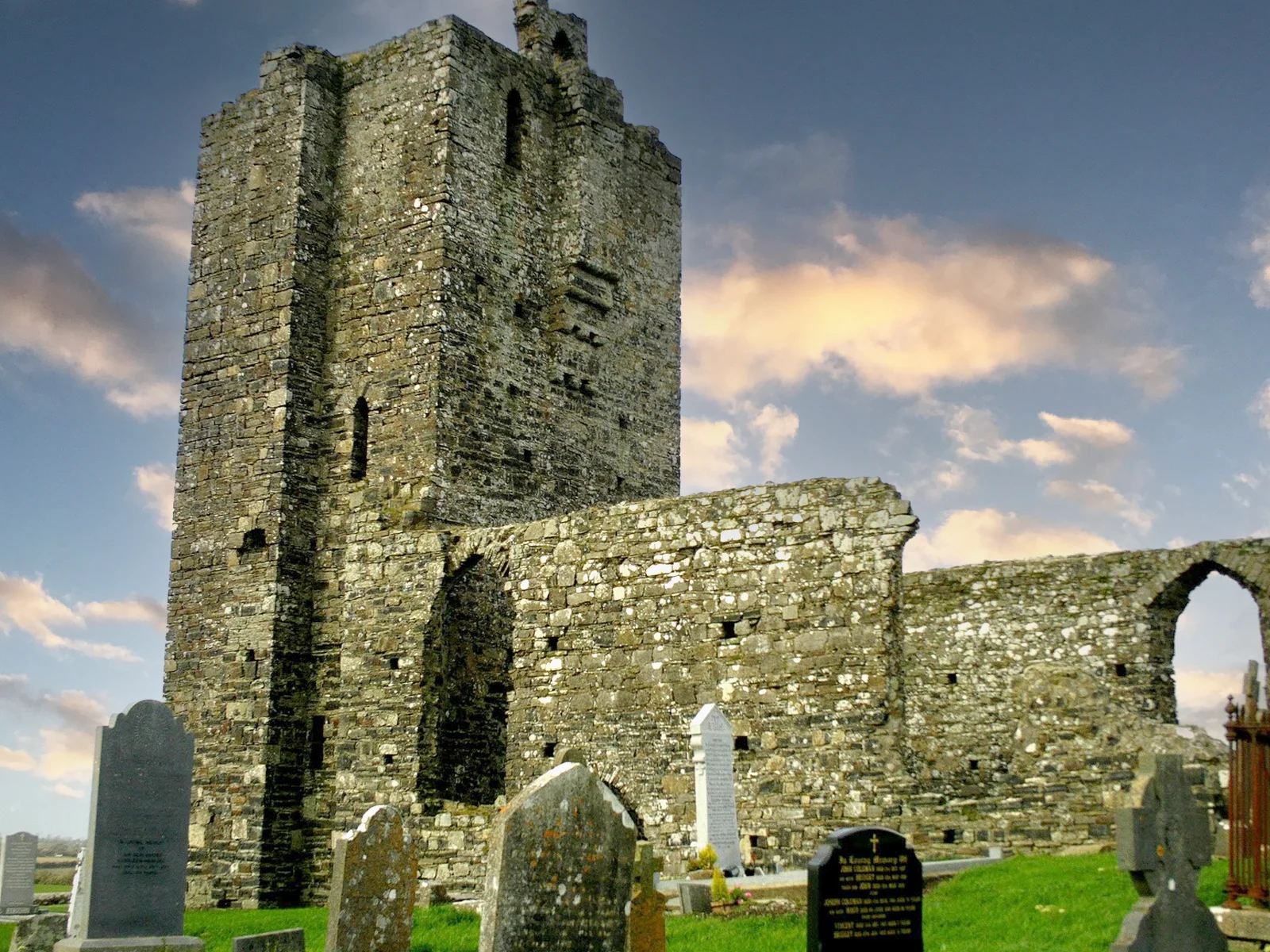
The regal visitation of 1615 reported that the church and chancel were wholly ruinous and the Civil Survey notes only ‘ye Walles of ye Parish Church’. In 1641 Thomas Fitz William fortified and held this castle for the confederates against parliamentary forces. Upon its surrender the greater part of the fortification was blown up with gunpowder - the square perforations in the walls of the church could have been musket holes dating from the time of the siege. It is recorded locally that in 1642 this building was besieged and the occupants, some 200 people put to the sword. A priest who was captured was put on the rack but confessed little.
The oldest headstone recorded by Dr. Egan dates from 20th March 1735.
Archaeological and Architectural Features
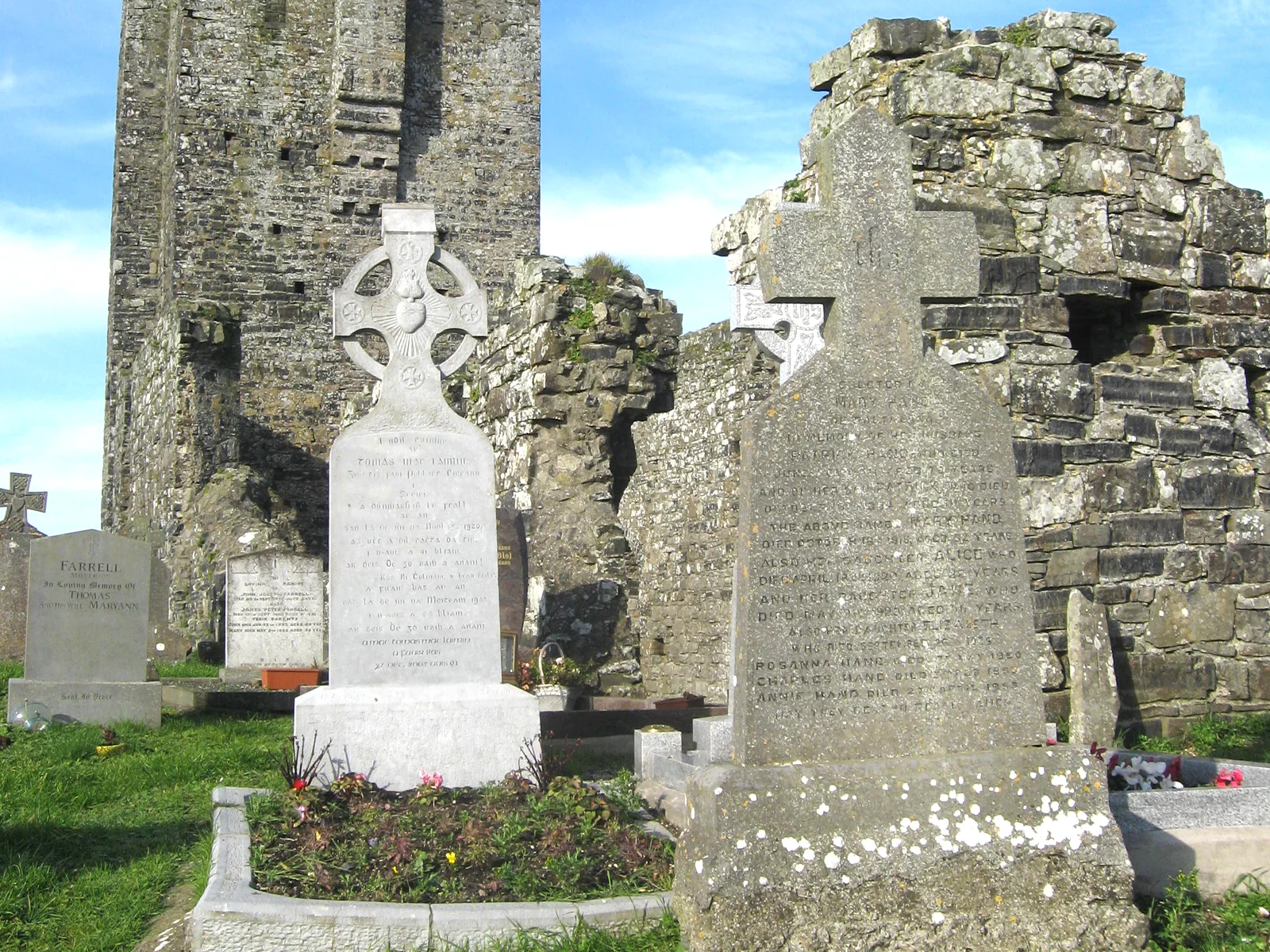
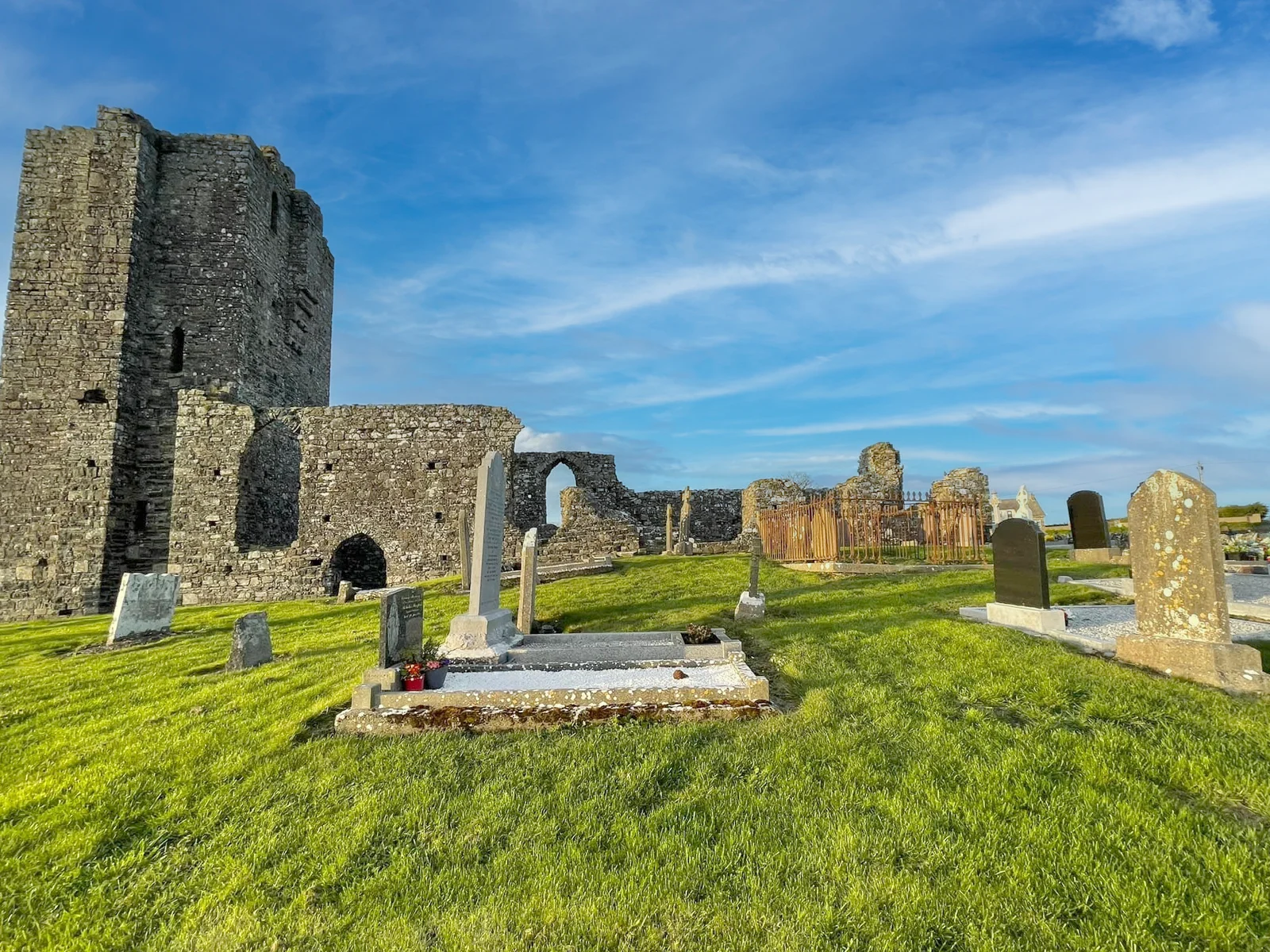
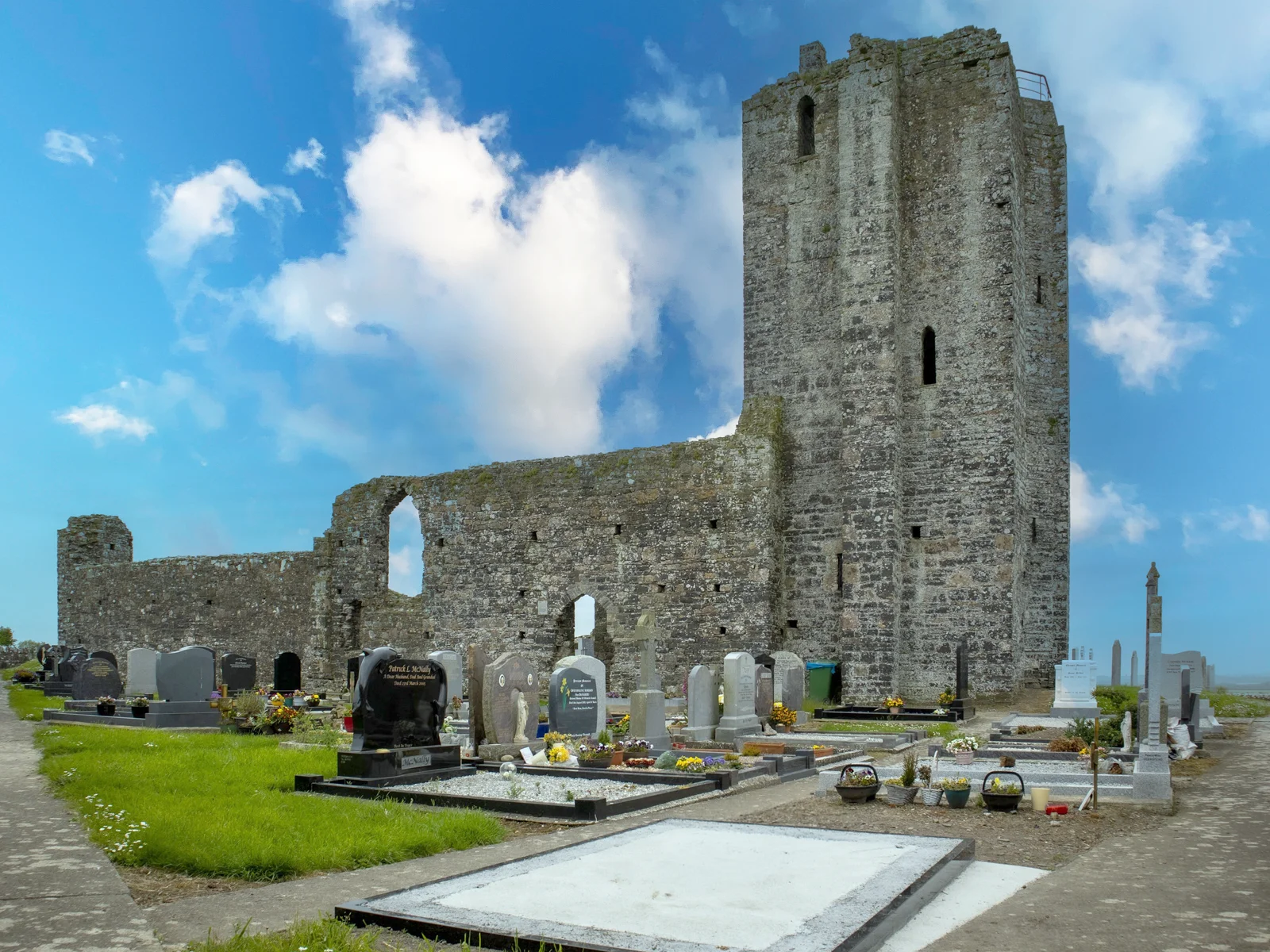
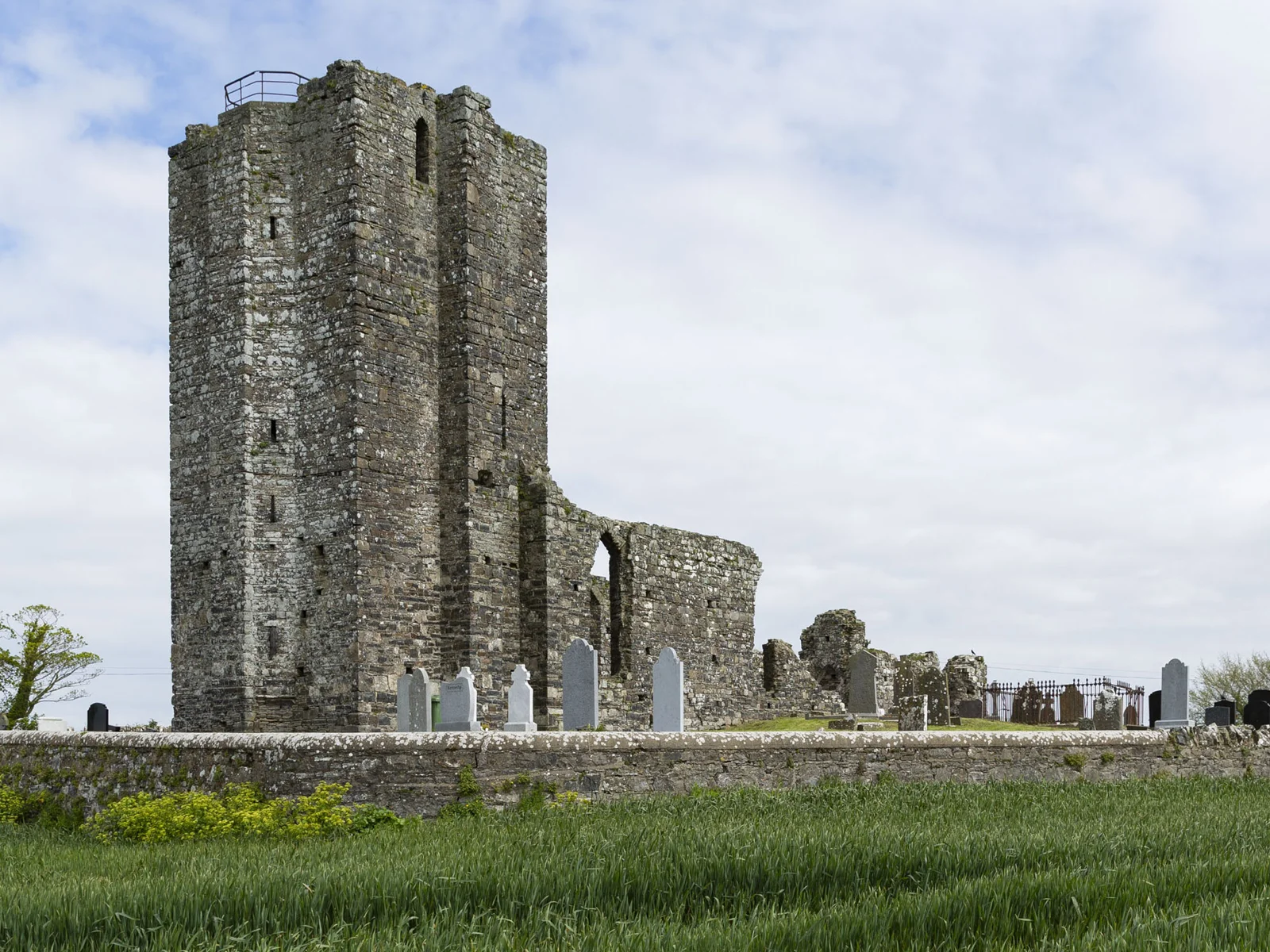
The standing remains within the graveyard consist of the north and west walls of a late medieval church (DU013-02101). It is constructed of roughly coursed limestone rubble. The north wall stands to c. 2m and the west gable wall stands to c. 1.5m. There are splayed openings in the north wall. There is a possible holy well located to the southeast of the church. The rectangular opening is located in an earthen bank under a large tree.
General Condition
The condition of the graveyard is fair with regular maintenance consisting of grass cutting being undertaken. The graveyard is no longer in use. Prior to the completion of the M50 motorway the site was accessed from Dunsink Lane and maintained by Fingal County Council. The graveyard is now accessed from within the State Laboratory grounds at Abbotstown and is maintained by State Laboratory staff.
General Description
Sub-oval graveyard, bounded to the north and west by a roughly coursed rubble limestone wall with stone coping in parts. The north-eastern boundary consists of a modern breeze block wall. The southern boundary consists of a deep ditch with evidence of stone facing and an external bank. There is standing water in the base of the ditch. The ditch and bank may represent the remains of an ecclesiastical enclosure. The ground within the graveyard is raised compared to that outside.
The grave markers within the graveyard are of 18th and 19th century date. They are generally east-facing and located to the south of the church which is on the highest ground in the graveyard. There are some grave markers within the church. The majority are headstones with either bell, curved or flat tops. Decoration on the grave markers includes IHS markers within sunbursts and mortality symbols including carved hourglasses. The graveyard contains a number of memorials dedicated to merchants from the city of Dublin. That of Maurice Ward is inscribed as follows "This stone was erected by Christ. Ward Merchant of Thomas Street Dublin in Memory of his father Maurice Ward and his posterity who departed this life April the 15th 1773 Aged 66 years, May mercy guide...".
Surveys: JAPMDI iii p62-62; viii p277; Irish Memorials Assoc. Journal xii p384-387. M.J. Egan Vol.9 p6-21
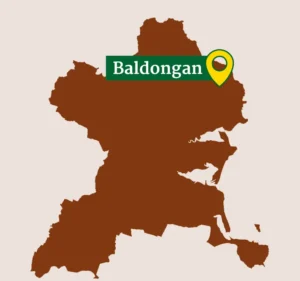
Directions to Baldongan
Tip: directions will open in a new tab. You may need to enter your starting location manually.